
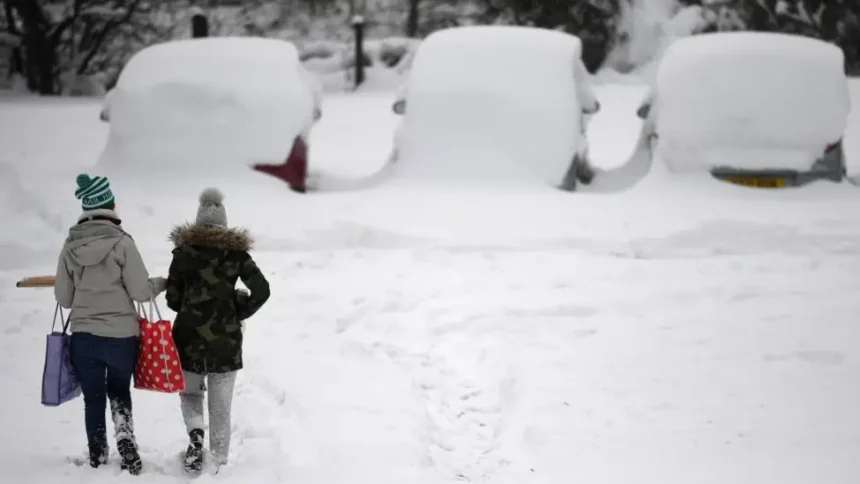
Storm Goretti, named by Meteo, France, is expected to cause the most damage in northern France. In addition to this, south, west England will experience strong winds, and Wales, central, and southern England may also see snow falling extensively.
Giving a name to a storm is a joint decision. When one meteorological agency names a storm, other agencies also use the same name in order to keep the communication clear and consistent. In the UK, the Met Office cooperates with Ireland’s Met ireann and the Netherlands’ KNMI to name storms that are predicted to cause medium or high impacts.
Why Are Storms Named?
Storms are named mainly because of strong winds, but heavy rain or snow can also be part of the reason. The names are taken from the publicsuggestionsof the UK, Ireland, and the Netherlands.
Amy, for instance, was selected as the top female name given to the Met Office by the public. Some names also have a personal meaning, like Fionnuala, suggested as a strong name given to a daughter. A few Dutch names are also on the list. KNMI, the Netherlands’ weather service, became a member of the western storm naming group in 2019.
For instance, Wubbo was made to honor Wubbo Ockels, the first Dutch astronaut. Why Aren’t Some Letters Used? The alphabet used for storm names has only 21 letters.
Therefore, names such as Quentin, Ursula, Xavier, Yvonne, or Zendaya will not be on the list of storm names. For instance, the 2022/23 season only had two named storms in August. In February 2022, the week with the storms Dudley, Eunice, and Franklin hitting one after another.