High Court Limits Use of Emergency Powers
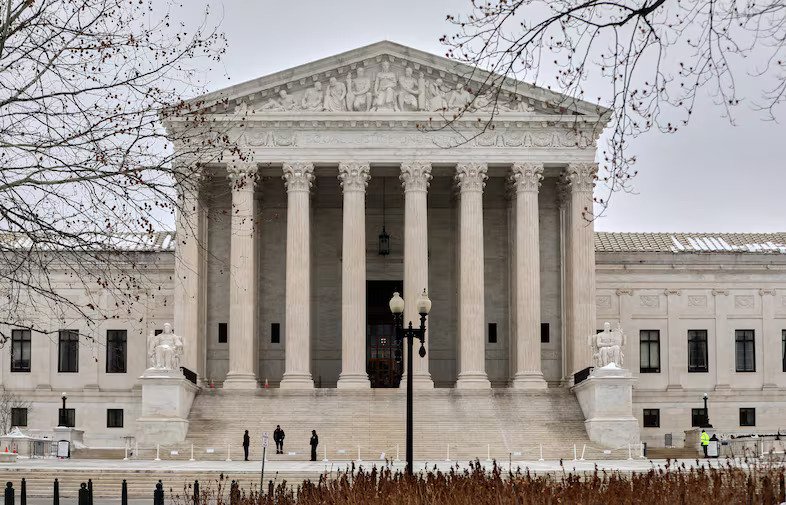
The Supreme Court of the United States ruled 6 to 3 that President Donald Trump went beyond his authority when he imposed sweeping global tariffs under a law meant for national emergencies.
At the center of the case was the International Emergency Economic Powers Act. Trump relied on that statute to place broad import taxes on goods from countries around the world. The court said the law does not give a president the power to set tariffs in that way.
Chief Justice John Roberts wrote the majority opinion. He was joined by three liberal justices and two conservatives, Neil Gorsuch and Amy Coney Barrett. Justices Clarence Thomas, Brett Kavanaugh and Samuel Alito dissented.
Roberts wrote that Congress never clearly authorized tariffs under IEEPA. As a result, the court held that the law cannot be used to impose them.
What the Ruling Changes
The decision wipes out many of Trump’s country based or so called reciprocal tariffs, including rates that reached 34 percent on China and a 10 percent baseline on other nations. It also blocks a 25 percent tariff applied to certain goods from Canada, China and Mexico that the administration linked to fentanyl concerns.
However, not all tariffs are affected. Duties on steel and aluminum, which were imposed under separate trade laws, remain in place.
Trump reportedly called the ruling a disgrace and said he has a backup plan. He is expected to explore other legal paths to reimpose similar measures.
Despite the White House criticism, markets reacted positively. Stocks climbed after news of the ruling broke.
Refund Questions and Business Reaction
The ruling raises the possibility that companies could seek refunds for tariffs already paid. The court did not directly address how repayment should work. In his dissent, Kavanaugh noted that returning billions of dollars could have a major impact on the Treasury.
By mid December, tariffs imposed under IEEPA had generated about 130 billion dollars, according to U.S. Customs and Border Protection data.
Business groups welcomed the decision. Victor Schwartz, head of wine importer VOS Selections, called the tariffs arbitrary and harmful to companies. The advocacy group We Pay the Tariffs urged the government to create a fast and automatic refund process for small businesses.
Constitutional Debate Over Tariff Power
The Constitution gives Congress the authority to set tariffs. Trump argued that IEEPA allowed him to regulate imports during what he described as unusual and extraordinary threats.
Before Trump, no president had used the law to impose tariffs. Lower courts had already ruled against the administration, prompting the Supreme Court to step in and issue a final decision.
The ruling comes after the court previously limited executive authority in other cases, including when it blocked President Joe Biden from canceling large amounts of student loan debt under the major questions doctrine.
Friday’s decision marks one of the rare legal defeats for Trump before a court with a conservative majority. It also reshapes the limits of presidential trade authority and sets up new battles over how far the executive branch can go without clear approval from Congress.