
Polar Bears are getting fatter in Svalbard
Scientists who studied polar bears on the Norwegian Arctic archipelago Svalbard found some surprising results. The bears in Svalbard have been getting fatter and more healthy since the 1990s, despite the fact that sea ice has decreased due to climate changes.
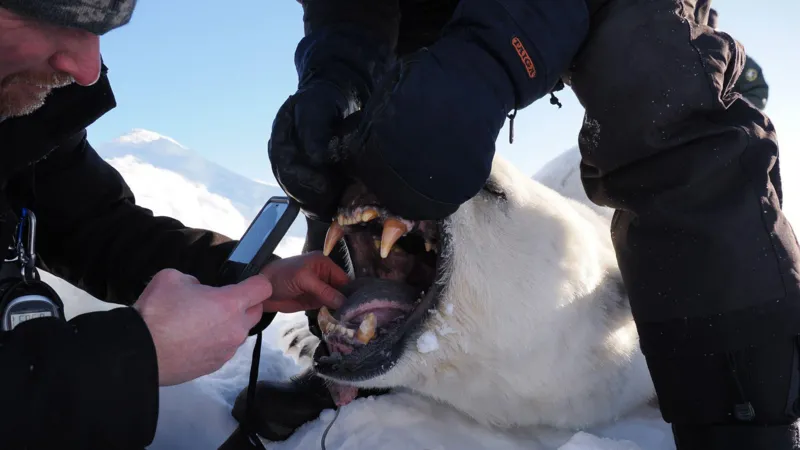
The polar bears hunt seals to obtain the fat-rich diet they need for their energy and insulation. They also use this food when nursing their cubs. Between 1992 and 2019 researchers tracked 770 bears, measuring weight and condition. Results showed that fat reserves had increased significantly.
Adaptation of Changing Conditions
Scientists believe that Svalbard’s bears are adapting to the loss of ice by consuming more food from the land. The Svalbard bears are supplementing their diet with reindeer, walruses and other land animals.
The Norwegian Polar Institute’s Dr Jon Aars said that “fatter bears are healthy.” I would have thought that body condition would decline with the melting of sea ice. But this hasn’t yet happened.
The polar bears now have a source of fat food, thanks to the walruses that were almost extinct in Norway until 1950. Seals may be easier to catch due to reduced sea ice, since they tend to congregate in small areas.
The Short-Term Gains and the Long-Term Rises
Scientists warn, however, that this trend might not be sustainable. The continued sea ice loss will make bears travel farther to find food. This increases energy consumption and reduces fat reserves.
Svalbard’s polar bear population is recovering as well from the heavy pressure of hunting in the twentieth century. This recovery, combined with an increase in the reindeer population and walrus population has given a temporary benefit.
Arctic Challenges: A Wider Perspective
Climate change affects polar bears in different ways elsewhere in the Arctic. As temperatures increase in Canada’s Western Hudson Bay region, the number of polar bears is decreasing.
Polar Bears International’s Dr. John Whiteman emphasized the fact that survival is not just about body shape. The survival rate of cubs and young bears is lower when there are more ice-free day.
Whiteman stated that “ice loss will eventually lead to declines.” Whiteman said that the conditions can differ greatly by region.