As a child, Andrew Ochieng survived one of the world’s deadliest parasitic diseases. Today, he fights the same illness from the back of a motorbike, moving across remote villages near the Kenya-Uganda border.
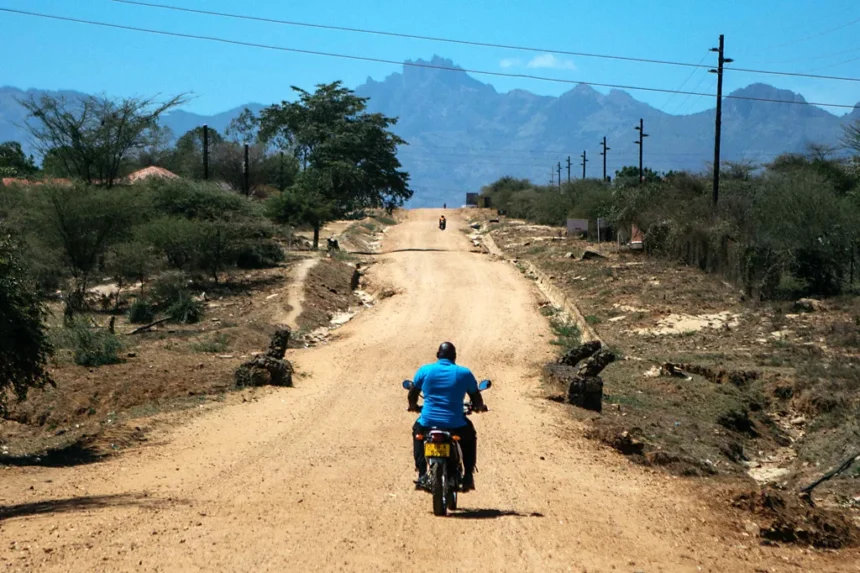
Each morning, Ochieng straps on his helmet and loads medical kits onto his bike. Then he rides for hours across dry plains and rough tracks. His goal is simple. Find people with visceral leishmaniasis, known locally as Kala azar, and get them help before it is too late.
A disease he knows too well
Ochieng does not speak about Kala Azar as an outsider. He lived through it. At around 12 years old, he fell ill with a fever that lasted for weeks. He says the pain felt like being hit by a heavy truck.
At first, no one knew what was wrong. His family took him to a traditional healer. The healer cut his stomach with a razor and rubbed the wounds with burned animal dung. He was also fed bitter herbs. None of it worked.
Eventually, Ochieng reached a hospital. There, he endured 60 injections over nearly two months. He survived, but the scars remain on his body and in his memory.
Because of that experience, he chose a different path. Today, he works as a community mobiliser for the Drugs for Neglected Diseases Initiative, known as DNDi. His work focuses on stopping others from suffering the same fate.
A silent and deadly illness
Visceral leishmaniasis is one of the most dangerous parasitic diseases in the world, second only to malaria. Yet few people outside affected regions know about it.
More than 600 million people are at risk worldwide. In 2022, nearly three-quarters of reported cases were in East Africa. Each year, an estimated 50,000 to 90,000 people fall ill. However, only a fraction of cases are officially reported.
The disease spreads through sandfly bites. It causes fever, weight loss, and swelling of the liver and spleen. Without treatment, it is fatal in up to 95 percent of cases. Children are especially vulnerable. In 2022, half of all cases occurred in children under 15.
Taking healthcare to the villages
Ochieng travels to as many as 16 villages each month. In Akorikeya village in northeastern Uganda, he sets up his station under an acacia tree. Men gather nearby to drink tea. Children watch quietly.
First, he observes. He looks for signs of fatigue or weight loss. He checks children closely. Next, he examines the lower left side of the abdomen to detect a swollen spleen, one of the key warning signs.
If symptoms appear, he uses an RK39 rapid blood test. The result is ready in about 10 minutes. He also tests for HIV, since people with weakened immune systems face a much higher risk of severe disease.
Season matters too. From September to February, short rains create better conditions for sandflies to breed. During this period, case numbers usually rise.
Chasing patients across borders
Following up with patients is not easy. The Pokot people move often, crossing between Kenya and Uganda to find pasture and water. Some walk more than 50 kilometres in a single day.
As a result, Ochieng sometimes arrives at a village only to learn that his patient has left. Then the search begins. He asks neighbours. He follows leads. Soon, he is back on his motorbike, scanning the landscape for someone who may be days away.
Poverty and disease
Sandflies spread Kala Azar, but poverty makes it worse. The disease mainly affects people who are malnourished and live in homes without solid floors. Access to healthcare is limited. Sanitation is poor. Displacement is common.
Environmental changes also play a role. Deforestation, irrigation projects, and climate shifts raise humidity and temperature. These conditions help sandflies thrive.
Local customs add further risk. Many men sleep outdoors, which increases exposure to bites. Villagers also protect anthills, since termites are a food source during the rainy season, even though sandflies breed there.
The reality of treatment
When Ochieng finds a suspected case, he often transports the patient himself. They ride together to Amudat Hospital, near the border.
At dawn, nurses prepare rows of injections at the hospital’s Kala Azar treatment centre. Patients range from infants to adults. Most receive a 17-day course of sodium stibogluconate and paromomycin.
The treatment works, but it is harsh. Injections are painful. Side effects can affect the heart, liver, and pancreas. Younger patients often cry as nurses move from bed to bed.
Better options exist, but access is limited. Liposomal amphotericin B is effective and safer, yet it requires refrigeration and intravenous delivery. As a result, it is difficult to use in remote settings.
Signs of progress
There is hope. In recent years, DNDi tested a new combination of miltefosine and paromomycin. The trial included many children and showed strong results. The newer regimen reduced injections, shortened treatment time, and lowered serious risks.
Still, reinfection remains a threat. When patients return to the same living conditions, exposure continues. Without broader changes, progress is fragile.
Lives behind the statistics
One former patient is Chemket Selina, now a mother of four. As a child, she suffered weeks of fever before Ochieng diagnosed her. He carried her to the hospital on his motorbike.
Today, she worries about her children. Her family eats once a day. Food depends on what can be found nearby. Despite her youth, hardship has aged her early.
Her children show no signs of Kala Azar, for now. Yet the risk never disappears.
Many still believe that painful treatment works best. Doctors continue to see patients arrive late, often after traditional remedies fail. At the same time, awareness is growing. Former patients now help spot symptoms and refer others.
A long road ahead
Outbreaks in Kenya in 2020 and 2022 showed how quickly the disease can return. Millions remain at risk. Still, experts believe elimination is possible with early detection and easy access to care.
For Ochieng, the mission is personal. Each ride across the bush is a chance to save someone from the pain he once endured. He keeps moving, village by village, driven by memory and purpose.