
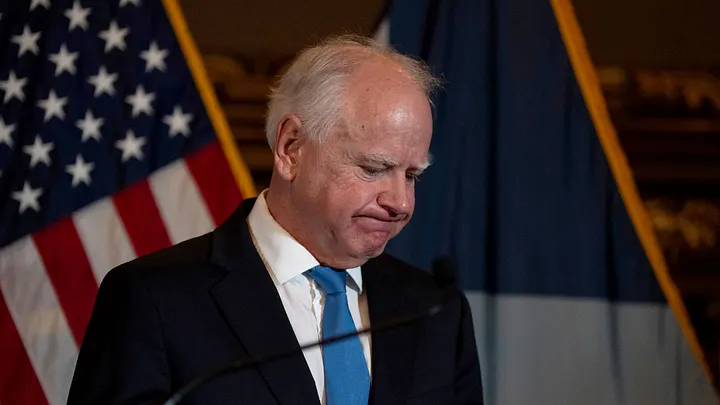
Minnesota Governor Tim Walz has ended his bid for re-election amid a massive fraud scandal that has rocked his administration. Once a rising figure in the Democratic Party—serving as a congressman, vice presidential nominee, and progressive governor—Walz now faces the harsh reality of political setbacks.
Early Life and Military Service
Born and raised in rural Nebraska, Walz joined the Army National Guard in 1981 after finishing high school. He earned a degree in social science education from Chadron State College in 1989. After spending a year teaching in China, he returned to Nebraska to work as a teacher and coach. In 1996, Walz moved to Mankato, Minnesota, to teach geography at Mankato West High School. He also served in Italy during Operation Enduring Freedom before retiring from the National Guard in 2005.
Political Rise
Walz entered Congress in 2006, winning Minnesota’s 1st District by defeating a six-term Republican incumbent. He built a reputation as a moderate Democrat, focusing on veterans, agriculture, and education. In 2017, he launched his campaign for governor with a “One Minnesota” message and took office in January 2019 with broad support from the Minnesota Democratic–Farmer–Labor Party.
National Spotlight as VP Pick
In 2024, Walz became nationally known when Kamala Harris chose him as her running mate. Harris highlighted his experience as a governor, teacher, coach, and veteran. Walz said his appeal came from connecting with rural voters and working-class communities. Still, he faced scrutiny for several controversies, including stolen valour allegations and an exaggerated claim about being at Tiananmen Square, which he later corrected.
Achievements as Governor
During his time as governor, Walz signed major legislation into law. This included a $2.3 billion education budget, expanded pre-K programs, increased mental health resources for schools, the Protect Reproductive Options Act, the Minnesota Voting Rights Act, a $2.6 billion infrastructure package, and a paid leave law.
Fraud Scandal and Political Fallout
Walz’s re-election bid collapsed under the weight of a massive fraud investigation involving COVID-era programs. More than 90 people have been charged since 2022, and total losses could reach $1 billion to $9 billion. Critics say Walz failed to address early warning signs, eroding public trust. He decided to step away from the campaign to focus on governing and addressing the fallout, rather than on political ambitions.
Legacy and Future
Walz’s political future is uncertain. His daughter, Hope, suggested part of his decision to step down was to avoid political attacks and scrutiny tied to his national profile. Observers say Walz’s story shows the dangers of unchecked power and the consequences of delayed accountability.