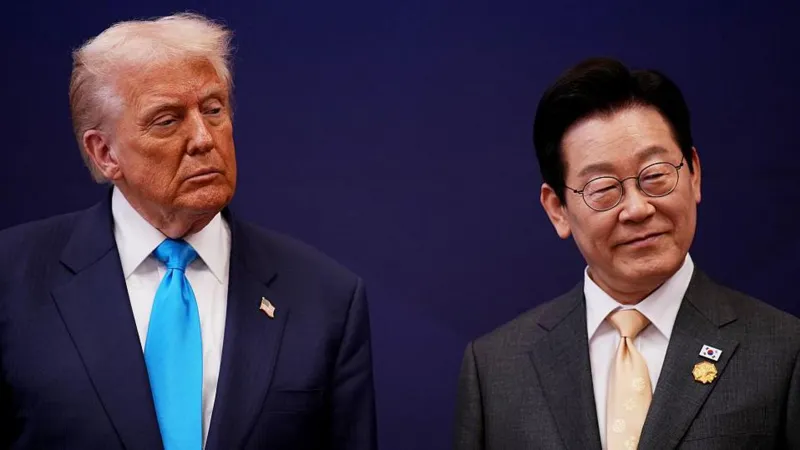
Donald Trump, the US president announced that tariffs would be raised to 25% on South Korean imports. This decision was made after accusations were leveled that Seoul had failed to honor the terms of a bilateral trade agreement between two countries signed last year.
This includes automobiles and pharmaceuticals as well as lumber and other products covered by reciprocal trade agreements. Previously, the tariff rate for goods was 15 percent.
Trump said that South Korea was slow in moving the deal forward through the legislative process, despite the fact the United States had acted swiftly to reduce its tariffs as part of the agreement.
South Korea seeks urgent talks with Washington
Officials in South Korea said that they did not receive any official notice about tariff increases from the US. To clarify and ease trade tensions, the government is calling for an urgent discussion.
Kim Jung kwan (South Korea’s industry minister), who is currently in Canada and is due to visit Washington shortly, will be traveling soon. Kim Jung kwan, South Korea’s Industry Minister who is currently in Canada, will be traveling to Washington soon.
South Korea’s second-largest export market, after China, was the United States. The US car market alone is worth around 30 billion dollars.
The Market is Still Cautious
After Trump’s statement, the shares of South Korean automakers like Hyundai and Kia dropped initially by up to 6 percent.
The main South Korean stock index (Kospi) recovered early losses to finish the day with a gain of 2.7 percent. Analysts believe investors are still unsure whether or not the tariff hike will take place.
Experts in the market attributed this cautious reaction to Trump’s recent reverse on tariffs proposed against European countries due to Greenland. Analysts say that the recent move is more of a negotiation tactic rather than a decision.
The US-South Korea Trade Deal: Background
In the trade agreement signed in October, South Korea committed to investing 350 billion dollars into the US economy. A part of the investment went towards strengthening cooperation in shipbuilding.
Tariffs: A Political Tool
Importing companies are responsible for paying tariffs, so US-based firms must pay the increased tax rate on South Korean products. Trump used tariffs to shape foreign policy in his second term.
He threatened Canada recently with 100 percent tariffs over possible trade relations with China. He warned other countries as well, such as the UK, about their opposition to US Greenland plans.