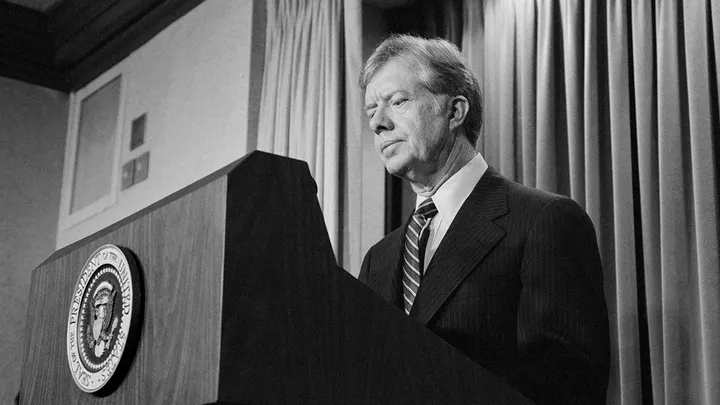
When Donald Trump ordered fresh strikes on Iran, the political conversation in Washington shifted overnight. What had been talk about court rulings and trade policy suddenly gave way to debate over war, presidential power, and a phrase that carries heavy historical weight: regime change.
The Power of Two Words
By openly raising the idea of regime change, Donald Trump stepped beyond limiting Iran’s nuclear ambitions. He signaled support for removing the country’s ruling clerics altogether.
That language echoes the approach of George W. Bush, who sought to remove Saddam Hussein from power in Iraq. At the time, the push was built around claims of weapons of mass destruction that later proved false. Much of the press initially backed the case for war, only to question it years later.
The lesson from that period still matters. Newsrooms, including institutions like The Washington Post, later admitted they did not challenge official claims strongly enough. Veteran journalist Bob Woodward even described the atmosphere as groupthink.
From Nuclear Sites to Political Overthrow
Trump previously argued that targeted strikes had crippled Tehran’s nuclear infrastructure. Now, however, his rhetoric suggests a broader goal. He has encouraged Iranians to remove Supreme Leader Ali Khamenei and dismantle the theocratic system that has ruled for decades.
Supporters who embraced Trump’s America First message expected fewer foreign conflicts. Instead, they see renewed military action abroad. Critics within his own party question why US resources are once again tied to instability in the Middle East.
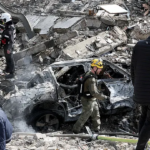
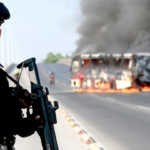
At the same time, Iran’s retaliation against Israel and American positions in the region was swift. What began as targeted strikes now looks more like a widening regional conflict.
Congress, War Powers and Political Reality
Senate Democratic leader Chuck Schumer has called for invoking the War Powers Act, arguing that Congress should assert its constitutional role. In practice, modern presidents often act first, while lawmakers respond later.
History offers many examples. From John F. Kennedy during the Cuba crisis, to Ronald Reagan in Grenada, to George H. W. Bush in Panama, commanders in chief have taken swift military action with limited initial oversight.
Once troops are engaged, political opposition becomes difficult. Few lawmakers want to appear unsupportive of forces in combat.
Why Media Skepticism Matters
The deeper issue may not be strategy alone, but scrutiny. Before the Iraq invasion, intelligence officials insisted there was clear proof of illegal weapons. That confidence collapsed under later investigation.
As coverage of Iran intensifies, journalists face a familiar test. Will they question intelligence claims and long term goals, or repeat them?
War can unite a country, at least briefly. Yet it also brings casualties and consequences that last for years. The debate over Iran is not only about military strength, but about judgment, evidence, and the responsibility of a free press.