
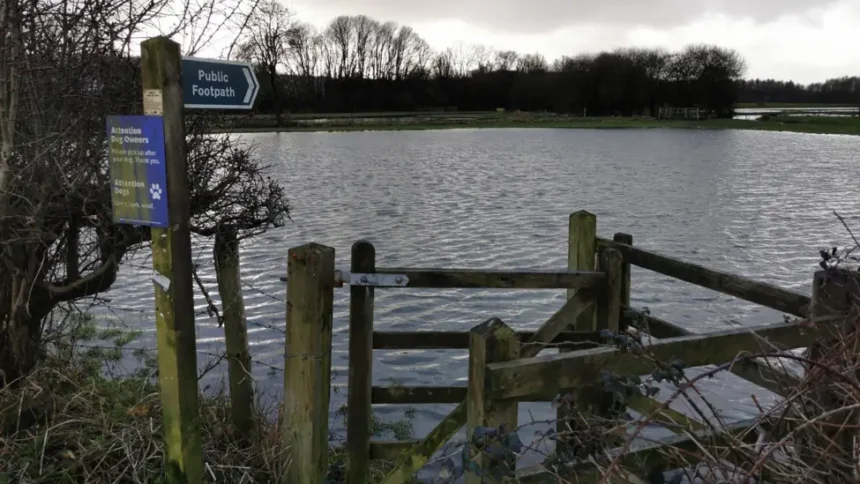
As January 2026 comes to a close, much of the UK is still dealing with wet and windy conditions. The month started with a sharp Arctic blast, bringing freezing temperatures and widespread snow. But the cold didn’t last long. Milder air from the Atlantic soon moved in, bringing heavy rain and flooding across the country.
Record Rainfall Across the UK
This January has been unusually wet. Some areas have seen almost double the average rainfall, while the wettest spots have received more than three times what’s normal. Storms Ingrid and Goretti hit one after the other, causing flooding, travel delays, and power cuts. Cornwall was hit hardest by Storm Goretti, which was the most severe there in over 30 years.
Storm Chandra followed shortly after, adding even more rain. In south-west England and Wales, 60 to 80 millimeters of rain fell on already soaked ground, with Dartmoor seeing over 100 millimeters in just one day. Northern Ireland also broke records, with Katesbridge receiving 100.8 millimeters in a single day. Wind gusts reached 80 mph at Orlock Head.
Why It’s Been So Wet
A mix of cold and wet conditions has dominated this month. High pressure over eastern Europe and Scandinavia trapped cold air, while the jet stream pushed a series of low-pressure systems from the Atlantic towards the UK. These systems slowed down when they met the high pressure to the east, causing prolonged rainfall.
Sometimes, colder air from the east turned rain into snow in northern highlands. Most of the wettest areas have been north-east Scotland, south-west England, and eastern Northern Ireland.
Floods Aren’t All Bad
Even though flooding has caused problems, all this rain is helping with long-term water supply. England faced a drought risk after a very dry 2025. To recover fully, most areas need at least average rainfall through spring. Recent rains have helped refill some reservoirs, but experts warn more rain is needed through March to avoid water restrictions later this year.
What’s Next?
The forecast for the rest of January and early February shows more wet and windy weather. Heavy rain and strong gusts are likely at times, and there’s little sign of any long dry spells soon.