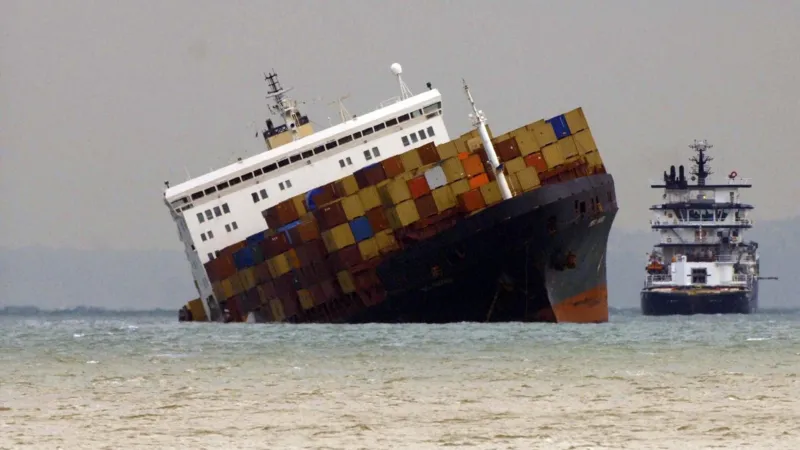
The southwest coast of England has long been a hazardous location for sailors, where storms, strong currents, and hidden reefs have sent thousands of vessels to their doom over the years. Many of these ships remain lost, broken, or plundered upon the seabed. Some of these disasters not only took many lives but also changed the course of maritime history.
One sad incident occurred on a stormy Christmas Eve during the Napoleonic Wars. The 44-gun frigate HMS Anson of the Royal Navy sailed from Falmouth to enforce a blockade in Brest. Tossed about in strong winds, the ship attempted to return but wrecked on 29 December. Over 120 persons were killed, including women, children, and even the ship’s boy. According to the maritime historian Richard Larn, the captain, Charles Lydiard, lost his life trying to save a small boy. Some fortunate survivors walked along the mast onto dry land. A cannon recovered from the wreck is now on view at Helston Museum in Cornwall.
The Wreck That Changed Maritime Navigation
Another catastrophe involved the HMS Association and three other ships around the Isles of Scilly, where some 1,450 sailors were taken by the sea in the second largest single-night loss to the Royal Navy. The ships had gone off course as a result of navigational mistakes that came from an inability to estimate longitudes. This disaster provoked two acts of parliament and spurred a carpenter named John Harrison to develop a chronometer, a long-sought solution to the problem of longitude. The wreck of the HMS Association was rediscovered in 1967 by a team including Richard Larn.
These shipwrecks remind us of just how dangerous the seas once were. They also show us how, amidst tragedy, human determination and ingenuity came forward to develop a better future for maritime safety.