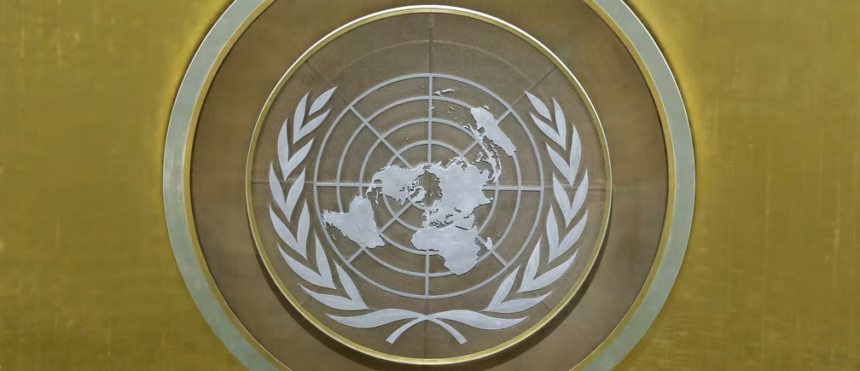
World leaders are gathering at United Nations headquarters in New York as the UN General Assembly 2026 enters a crucial stage.
The 81st session opened on 8 September. Its main General Debate began on 22 September and continues through 26 September, with another day scheduled for 28 September. Leaders are discussing conflicts, climate change, development, global health and changes within the United Nations.
The session comes as countries face growing pressure to cooperate on major international problems. The UN is also working on reforms through its UN80 Initiative.
Quick Fact
| Detail | Information |
|---|---|
| Event | 81st UN General Assembly Session |
| Location | United Nations Headquarters, New York |
| Session Opened | 8 September 2026 |
| General Debate | 22 to 26 September 2026, and 28 September |
| UNGA President | Khalilur Rahman of Bangladesh |
| Theme | Restoring Trust, Managing Transformation: A United Nations That Delivers for All |
| Key Issues | Global conflicts, climate change, development, health and UN reform |
| Participants | Representatives of all 193 UN member states |
What Is the UN General Assembly?
The United Nations General Assembly is the UN’s main policy making body. All 193 UN member states take part, and each member state has one vote.
The Assembly provides a forum where countries discuss international issues covered by the UN Charter. These include peace and security, development, human rights and international cooperation.
The General Assembly normally works intensively from September to December. It then resumes its work from January until the agenda is completed.
UN General Assembly 2026 Focuses on Global Challenges
The theme reflects concerns about international cooperation and the ability of global institutions to respond to fast changing challenges. The UN says the high level week will cover issues including climate, health, artificial intelligence governance, peace and security, and sustainable development.
Major Meetings During UNGA 2026
The General Debate is only one part of the programme.
Several high level meetings are taking place during the session.
Climate Action and a Just Transition
On 23 September, leaders are meeting to discuss climate action and the transition toward cleaner economies.
The meeting focuses on international cooperation and the social and economic challenges linked to the energy transition.
Right to Development
The same day, the General Assembly is marking the 40th anniversary of the UN Declaration on the Right to Development.
The meeting will focus on development, equal opportunities and people's ability to participate in economic, social, cultural and political progress.
Sea Level Rise
On 24 September, countries will discuss the risks linked to rising sea levels.
The meeting will focus on international cooperation and the challenges faced by small island states and coastal communities.
Pandemic Preparedness
A high level meeting on 25 September will focus on pandemic prevention, preparedness and response.
The discussion comes as countries continue working on international rules and cooperation for future health emergencies.
Durban Declaration Anniversary
On 28 September, the Assembly will mark 25 years since the adoption of the Durban Declaration and Programme of Action.
The programme focuses on combating racism, racial discrimination, xenophobia and related intolerance.
The UN is entering its ninth decade while reviewing how the organization operates.
The UN80 Initiative brings together reform efforts covering efficiency, mandate reviews and changes across the UN system. Member states are leading the process, while the UN Secretariat provides technical support.
The reforms aim to improve how the UN uses its resources and carries out responsibilities given to it by member states.
Development Progress Remains a Challenge
Sustainable development is another major issue during the 2026 session.
The UN’s Sustainable Development Goals aim to address poverty, hunger, health, education, equality, climate change and other global challenges by 2030.
Progress remains uneven. Financing has also become a major concern for developing countries.
Why the UN General Assembly Matters
The General Assembly gives countries a common place to raise international concerns and negotiate shared responses.
Its resolutions can influence international policy and help establish political commitments. However, most General Assembly resolutions are recommendations rather than legally binding decisions.
One of the Assembly’s best known achievements came in 1948, when member states adopted the Universal Declaration of Human Rights.
UN General Assembly Meeting
The UN General Assembly 2026 brings countries together at a time of major international pressure.
Conflicts, climate change, development financing, public health and institutional reform are all part of the discussions. The outcome of these meetings will depend on negotiations among UN member states and the decisions they make during the session.