Université Laval, based in Québec City, Canada, focuses on sustainable food systems and nutrition across the entire food value chain. Its research addresses global challenges in health, sustainability, and climate adaptation.
Food systems worldwide face unprecedented pressure. They must feed a growing population, reduce environmental impact, improve public health, and adapt to climate change. Addressing these challenges requires scientific approaches that bridge agriculture, food sciences, nutrition, public health, policy, and innovation.
Université Laval positions itself as a strategic research partner for European institutions. It offers expertise to generate new knowledge, train scientists, and contribute to large international projects aligned with European research priorities.
Expertise Across the Food Value Chain
The university is a leader in sustainable agriculture, food processing, nutrition, and food security. Its approach spans the full food value chain, aligning with the EU’s Farm to Fork Strategy. By treating food systems as interconnected, Université Laval develops solutions that improve sustainability, resilience, and public health outcomes.
The university also excels in eco-efficient food services. By optimising food production and distribution, it reduces greenhouse gas emissions, limits food waste, and enhances nutritional quality in hospitals, schools, and public institutions.
Université Laval’s research ecosystem supports these efforts. The Institute of Nutrition and Functional Foods (INAF), founded in 2000, integrates multiple disciplines to address complex food system challenges. The Faculty of Agriculture and Food Sciences further strengthens research in sustainable agriculture and food security. Together, they form one of Canada’s largest research communities in food, nutrition, and health.
Strong International Research Capacity
Université Laval has the expertise, infrastructure, and administrative ability to coordinate large-scale international research initiatives. It participates in multilateral projects, including those funded by Horizon Europe. Its existing global research platforms allow agile and innovative collaboration with European and international partners.
Key International Initiatives
- Food4BrainHealth: This network studies nutrition strategies to support brain health, integrating neuroscience, public health, and chronic disease prevention. It aligns with European priorities on ageing and cognitive health.
- UMI-MicroMeNu: A joint unit with Italy’s National Research Council, focusing on the microbiome and metabolic health, providing a strong platform for collaborative research and training.
- PARERA: Supports evidence-based food regulation and risk assessment, enhancing food safety, consumer protection, and regulatory harmonisation for European and global systems.
An Integrated and Interdisciplinary Research Ecosystem
Université Laval mobilises 13 faculties across disciplines, from agriculture to social sciences, law, and engineering. This interdisciplinary approach supports research in precision nutrition, examining biological, behavioural, social, and environmental factors.
The NUTRISS centre applies precision nutrition at population and community levels, integrating social context and behaviour to develop equitable and scalable strategies.
The university also leads in innovative food solutions, including sustainable proteins, functional foods, and nutritional optimisation. Food labelling and public health tools are part of this research, helping promote healthier and more sustainable diets.
Unique Clinical Research Infrastructure
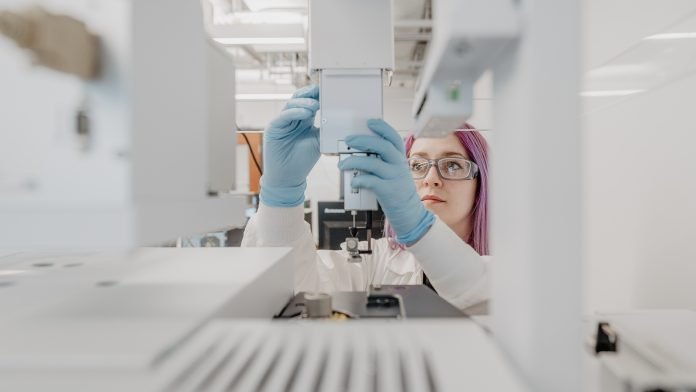
Université Laval offers large-scale clinical nutrition research facilities, enabling controlled dietary studies for up to 40 participants with three meals per day. This infrastructure allows rigorous evaluation of dietary patterns and provides high-quality evidence that informs public health policies and international nutrition guidelines.
A Strategic Partner for Europe
Université Laval combines scientific excellence, operational capacity, and international collaboration to support European institutions. Its integrated approach to food systems research and nutrition positions it as a reliable partner for projects that promote health, sustainability, and global food system innovation.