
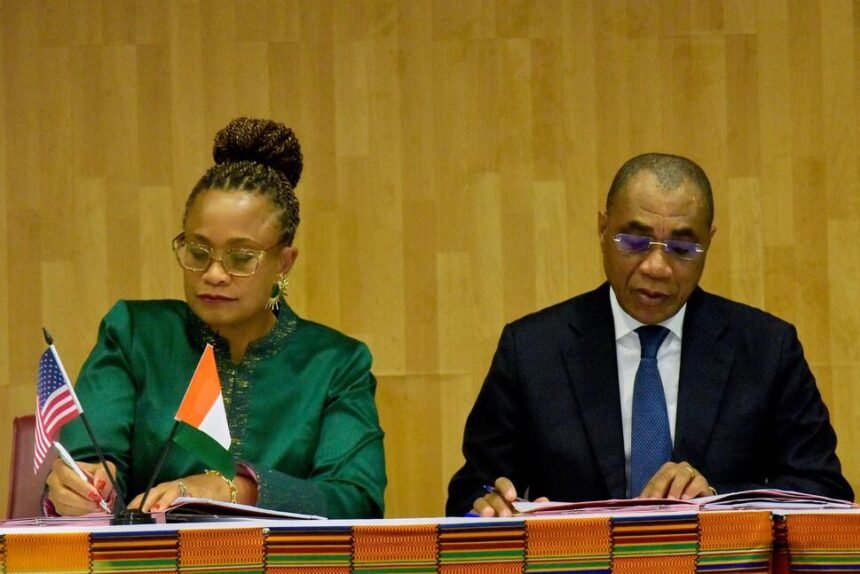
The United States and the Ivory Coast have signed a new health agreement requiring the U.S. to invest $480 million in the West African nation’s health sector. The deal is part of “America First” global health funding initiatives, reflecting the Trump administration’s foreign policy approach.
Focus Areas and Scope
The agreement, signed in Abidjan, covers HIV, malaria, maternal and child health, and global health security. It is the latest pact in a series of U.S. agreements with over a dozen African countries, many of which experienced previous aid cuts.
The new model emphasizes shared responsibility. Ivory Coast has pledged up to 163 billion CFA francs ($292 million) by 2030, covering 60% of the overall commitment, according to Prime Minister Robert Beugré Mambé.
Shifting Approach to Global Health
U.S. Ambassador to the Ivory Coast, Jessica Davis Ba, said the U.S. is moving beyond traditional aid. “Our cooperation is entering a new phase,” she said. “We are implementing the America First global health strategy, focusing on trade, innovation, and shared prosperity.”
The Trump administration describes these agreements as a way to boost self-sufficiency and reduce ideology and waste in international aid. The deals replace older agreements managed by USAID, which had previously invested $115 million in the Ivory Coast in health, education, and refugee support.
Analysts’ Perspective
Experts note that the approach aligns with President Trump’s transactional style in foreign relations. By negotiating directly with governments, the U.S. aims to advance its agenda while promoting efficiency and measurable results.