
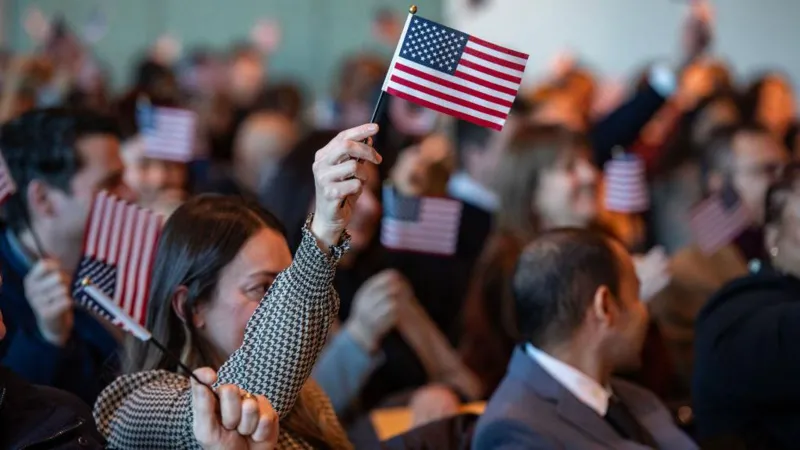
The United States has paused all immigration cases connected to 19 countries already listed under its current travel ban, according to an internal memo obtained by CBS News. This includes stopping final decisions on applications and postponing naturalization ceremonies—impacting migrants who were just days or even hours away from becoming U.S. citizens.
This change comes as reports suggest President Donald Trump may widen the travel restrictions from 19 to up to 30 countries. The pause also follows a tragic shooting in Washington, DC, that left one National Guard member dead and another critically injured. The suspect is an Afghan national living in the U.S., which has intensified the administration’s focus on immigration policy.
What the New Policy Means
On June 4, the White House announced a list of 19 countries—mostly in Africa, the Middle East, and the Caribbean—that would face tough, partial, or full immigration restrictions. Following that announcement, USCIS released new guidance telling officers to:
- Stop making final decisions on any immigration case
- Freeze all application types
- Cancel or postpone all citizenship oath ceremonies
The agency also halted all asylum decisions last week and stated it will re-examine green cards issued to people from the impacted countries.
A USCIS spokesperson told the New York Times that the administration wants to ensure that anyone receiving citizenship represents “the best of the best,” adding that citizenship is “a privilege, not a right.”
Who Is Affected?
Immigration lawyers say many clients have already had their citizenship interviews and ceremonies canceled—affecting migrants from places such as Venezuela, Iran, and Afghanistan.
For many applicants, the naturalization ceremony marks the end of a long, emotional journey that can take up to five years. It’s usually a joyful event where new citizens celebrate with small American flags as they take their oath of allegiance.
Now, thousands of families are left in limbo.
Why the Sudden Crackdown?
The White House has shifted sharply toward stricter immigration enforcement. President Trump has increasingly claimed that migrants and refugees contribute to what he calls America’s “social dysfunction.”
The administration’s tone hardened even more after the killing of Sarah Beckstrom, 20, and the serious injury of Andrew Wolfe, 24, both National Guard members, in last week’s shooting in the nation’s capital. The suspect—originally from Afghanistan—entered the U.S. under a program designed to support Afghans who assisted U.S. forces before the Taliban takeover.
As tensions grow, migrants from travel-ban nations are facing new uncertainty about their futures in the United States.