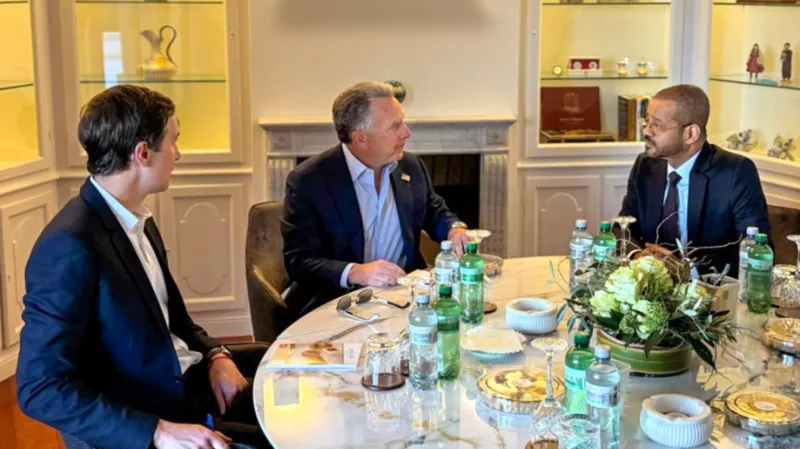
US and Iranian officials held a third indirect round of talks in Geneva to ease tensions and avoid military conflict. These negotiations are taking place at a crucial time, since Donald Trump warned that he would order military strikes against Iran if the two sides failed to agree on a nuclear deal.
Both sides took a break after three hours of discussion. Badr Albusaidi is mediating for Oman and said that negotiators had “positive and creative ideas”. The outcome is still uncertain.
Middle East Military pressure increases
These talks take place at a time when the US is deploying its largest military force in the Middle East region since 2003’s invasion of Iraq. Washington sent to the Middle East thousands more troops, two aircraft carrier, fighter jets and refuelling planes. The deployment was described by President Trump as “armada”.
Trump claims he is a fan of diplomacy. He has openly discussed a limited attack to force Iran into accepting US conditions. This is especially true eight months after US troops bombed Iranian nuclei during clashes between Israel & Iran.
Iran rejects key US demand
Iran refused to stop uranium enrichment on its own soil, which was a key US demand. Iranian officials also signaled that they might make limited concessions in terms of transparency and oversight for their nuclear activities.
The Iranian delegation will be led by the Foreign Minister Abbas Araghchi. Special envoy Steve Witkoff, and Presidential adviser Jared Kushner make up the US delegation.
Since decades, Israel and the United States have been accusing Iran of pursuing secretly nuclear weapons. Iran disputes this accusation and insists its nuclear program is for peaceful purposes. Iran is the only country that does not have nuclear weapons but enriches uranium to levels close to those used in weaponry. This raises global concerns.
State of the Union: Clashing of Statements
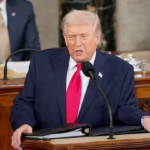
Trump mentioned Iran briefly in his address to Congress. In his recent address to Congress, President Trump briefly mentioned Iran. He didn’t provide any technical details. He said that he wouldn’t allow the “world’s largest sponsor of terrorists” to acquire nuclear weapons.
In June 2016, US forces along with Israel struck three Iranian sites nuclear. Trump claimed that the sites had been destroyed at that time. Iran stated later that enrichment stopped following the strike. Tehran, however, has refused to allow inspectors of the International Atomic Energy Agency (IAEA) access to damaged sites.
Araghchi publicly stated, hours before Trump’s address, that Iran will never produce nuclear weapons. Araghchi described the negotiations currently underway as an historic opportunity to achieve a balance agreement. A spokesman for the Iranian Foreign Ministry accused Washington of making false statements about Iran’s missile and nuclear programs.
Both sides are still far apart in their key positions despite continued diplomatic efforts.