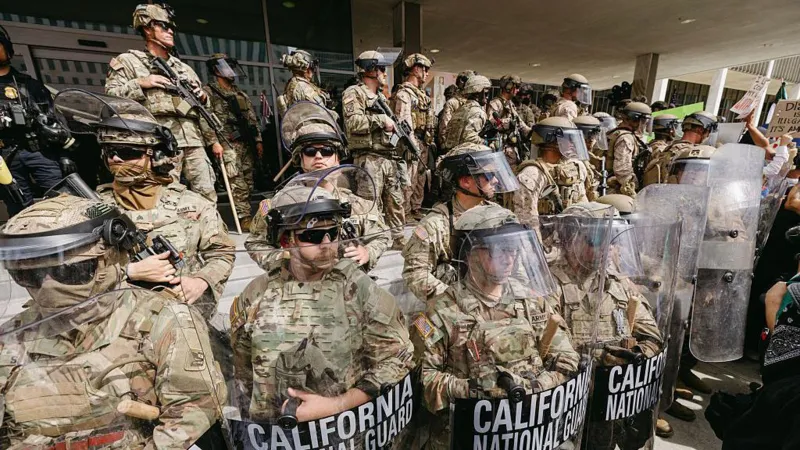
A US federal judge has blocked President Donald Trump’s attempt to keep National Guard troops under federal control in Los Angeles. Judge Charles Breyer ruled that the administration failed to justify taking command of California’s Guard and ordered the troops to return to the governor’s authority.
Court Rejects Trump’s Reasoning for Federal Control
Trump sent thousands of Guard members to Los Angeles in June after protests erupted over increased immigration raids. Judge Breyer said the administration did not prove that these protests required federalizing the state’s troops.
More than 300 Guard members are still under federal command six months later. Breyer noted that the White House had not provided a valid reason to keep them in place.
Judge Says the Administration Overstepped Constitutional Limits
The Trump administration argued that courts should avoid interfering when a president controls state National Guard units during an emergency. Breyer disagreed. He emphasized that the US system relies on strong checks and balances—not unchecked executive authority.
His ruling will take effect on 15 December, giving the White House time to file an appeal.
White House Defends Trump’s Actions
White House spokeswoman Abigail Jackson said Trump acted within his legal authority. She claimed the troops were deployed to protect federal officers and property during violent unrest. The administration believes it will win on appeal.
National Guard Deployments Face Challenges Across the US
Throughout the year, Trump sent Guard units to several cities, including Portland and Washington, DC. Many of those deployments drew legal challenges, and some were blocked by judges.
California Governor Gavin Newsom sued soon after the June deployment. Although an appeals court initially backed the administration, Newsom filed a new lawsuit in November, arguing that the protests had calmed and the troops were no longer needed.
Judge Questions Whether Troops Are Still Necessary
During a recent hearing, federal lawyers claimed the troops should stay because immigration agents in Los Angeles continued to face threats. Breyer pushed back, saying crises rise and fade and rarely justify long-term military involvement.
He also warned that the administration was “creating a national police force made up of state troops” by sending California Guardsmen to other states. Earlier this summer, he ruled that Trump’s Los Angeles deployment violated the law.
Broader Debate Over Trump’s Use of the National Guard
Each US state and territory operates its own National Guard. Trump argued that federalizing these troops was necessary to reduce violence, fight crime, and support immigration enforcement in Democratic-run cities.
His strategy has spurred legal battles nationwide as states challenge what they see as federal overreach