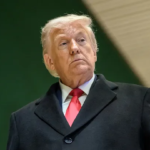
Earlier this month, US President Donald Trump sent a warning to Iran, saying “help is on its way” if the regime continues its current path. Since then, the US has been steadily building up its military presence in the region.
Last year, the US conducted Operation “Midnight Hammer,” striking Iranian nuclear facilities with over 100 aircraft, including B2 stealth jets. The mission succeeded without any losses, showing America’s capability to target Iran.
Trump has also hinted at possible future action, warning that “the next attack will be far worse” unless Iran agrees to limit its nuclear program. He described a “massive armada” heading to the region and urged Tehran to negotiate while time runs out.
US Military Presence in the Middle East
The US already maintains a strong footprint in the Middle East, with around 50,000 personnel deployed. About 10,000 are based at al-Udeid Airbase in Qatar, and others are stationed in Jordan, Saudi Arabia, the UAE, Oman, and Bahrain.
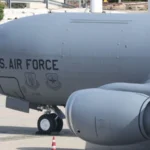
In recent weeks, intelligence reports have tracked additional aircraft arriving, including F-15 fighters, refueling tankers, and transport planes. Satellite images show new structures and anti-air defenses at al-Udeid. Experts suggest these moves may protect US forces and allies from possible Iranian retaliation.
Britain has also sent Typhoon jets to support regional security, while the US Air Force is running Operation Agile Spartan, a major exercise to test rapid deployment and sustained airpower.
US Naval Power Near Iran
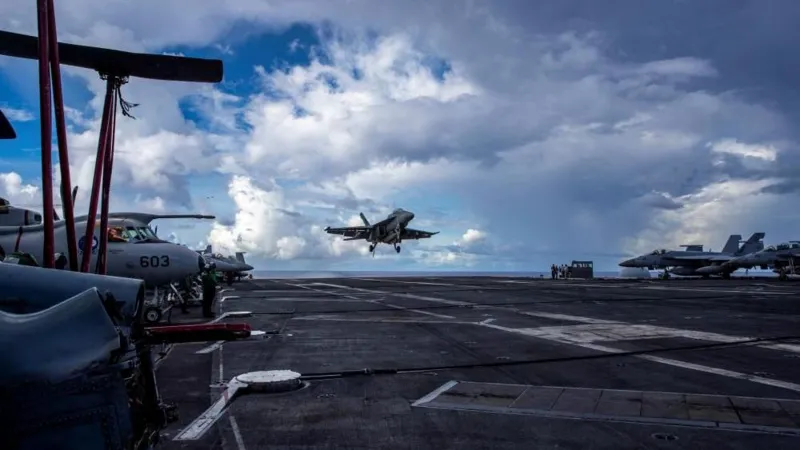
The USS Abraham Lincoln carrier strike group has been ordered to the Gulf. It carries around 70 aircraft, including F-35 stealth jets, and is supported by three destroyers armed with Tomahawk missiles and a nuclear-powered submarine. Two other US destroyers are already in the region.
Experts say the US could strike almost anywhere in Iran, targeting military facilities, missile sites, and strategic locations. However, decapitating Iran’s leadership would be riskier and might not have an immediate effect.
Possible Targets and Risks
Iran has significant short-range missiles and long-range drones, which could threaten US allies in the Gulf. Targeting the Revolutionary Guard Corps or pro-regime militias is an option, but hitting top leaders is complicated due to tight security.
Trump has preferred short, decisive military actions in the past. While he is ready to use force, he also continues to leave space for diplomacy, pushing Iran to negotiate limits on its nuclear program.
Conclusion
The US is signaling both strength and restraint. Military forces are in place, and exercises are underway. Yet, the final decision may balance showing resolve against Iran with avoiding a long, drawn-out conflict. The world watches closely as tensions rise in the Gulf.