
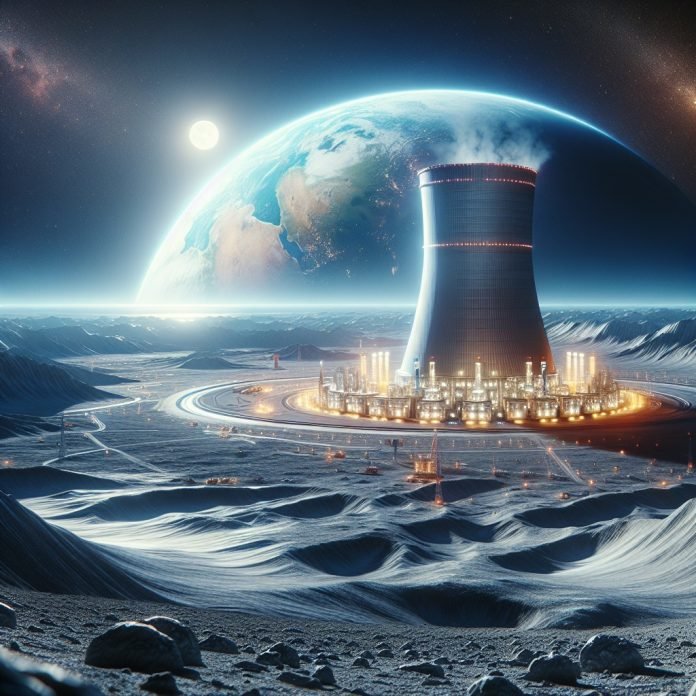
US moves toward nuclear power on the Moon
The United States has taken a major step toward building a nuclear reactor on the Moon. The Department of Energy and NASA have signed a new memorandum of understanding that deepens their long running partnership.
Together, the two agencies plan to develop a fission surface power system to support lunar missions. Over time, this system could also supply energy for future missions to Mars.
Officials expect the first reactor to become operational around 2030. If successful, it would enable a lasting human presence beyond Earth.
Strengthening US leadership in space
This effort goes beyond science. It reinforces US leadership in space technology and energy systems. By investing in lunar nuclear power, the United States aims to stay ahead in a rapidly changing space race.
Jared Isaacman said the country remains committed to returning to the Moon and building the infrastructure needed to stay. He stressed that nuclear power plays a central role in enabling future missions deeper into space.
Why nuclear power matters on the Moon
The Moon presents extreme challenges. Long nights last about two weeks. Temperatures drop sharply. Dust also interferes with equipment.
Because of these limits, solar power alone cannot meet mission needs. In contrast, a nuclear reactor can supply constant, high-density power without interruption.
This steady energy could support habitats, research systems, communications, and resource extraction. As a result, long-term lunar missions become practical rather than experimental.
DOE and NASA expand collaboration
DOE and NASA are working closely across the entire program. Their cooperation covers reactor design, fuel development, safety approval, and launch readiness.
This partnership builds on more than 50 years of shared experience in nuclear science and space exploration.
US Energy Secretary Chris Wright said that when American innovation comes together, the country achieves historic breakthroughs. He described the agreement as a continuation of that tradition and a milestone for both nuclear energy and space exploration.
Global competition for lunar energy
The United States does not stand alone in this effort. Other countries are also exploring nuclear fission as a power source for the Moon.
Many see compact reactors as the best way to overcome long lunar nights and extreme conditions. These systems offer reliable, energy-dense power for permanent bases.
Moreover, success on the Moon could unlock deeper space missions. Once nations master the world’s nuclear power, crewed missions to Mars become more achievable.
Enabling the next era of space exploration
The DOE NASA initiative sets the foundation for sustained exploration beyond Earth.
A nuclear reactor on the Moon would do more than supply electricity. It would support science, reduce dependence on Earth-based supply chains, and secure a leadership role for the United States in the future of space exploration.