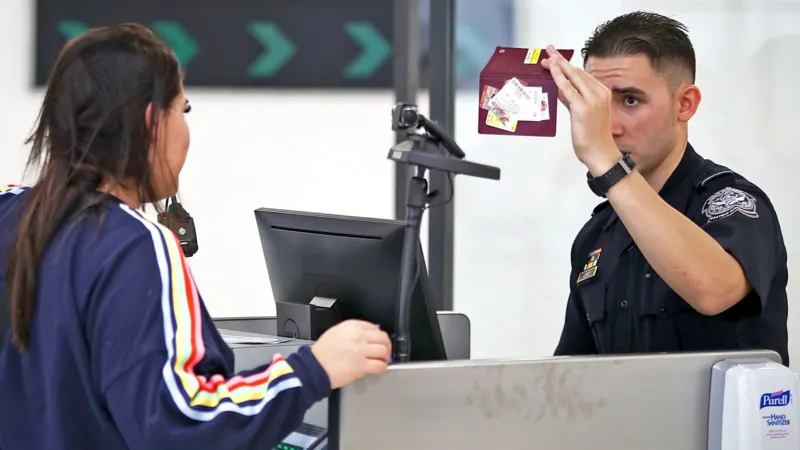
Foreign visitors from countries that can currently enter the United States without a visa — including the UK — may soon need to hand over their social media history from the last five years. US officials introduced this new proposal as part of a plan to expand the requirements for the Electronic System for Travel Authorization (ESTA), which allows eligible travelers to stay in the US for up to 90 days.
Stricter Border Rules Under the Trump Administration
Since returning to the White House in January, President Donald Trump has pushed for tougher border rules. He says national security demands stronger screening. Analysts, however, warn that these new requirements could discourage many travelers and raise major privacy concerns.
The US expects a large increase in international visitors next year as it prepares to co-host the men’s football World Cup and gears up for the 2028 Olympics in Los Angeles. Customs and Border Protection (CBP) and the Department of Homeland Security (DHS) submitted the proposal to the Federal Register, the government’s official record.
What ESTA Applicants May Need to Provide
According to the proposal, ESTA users would need to list every social media account they used during the past five years. The document does not explain what specific information officers would collect, but the requirement marks a major expansion compared to the current system, which only asks for basic personal details and a $40 fee.
ESTA currently serves travelers from about 40 countries, including the UK, Ireland, France, Japan, and Australia. It offers multiple entries over a two-year period.
The new proposal goes further. It asks applicants to provide phone numbers from the last five years, email addresses from the past decade, and additional family information. The plan follows Trump’s executive order aimed at strengthening protection against foreign terrorist threats.
Social Media Checks Already Expanded for Other Visas
The Trump administration has already intensified screening for student visas and H1B visas. Applicants — and even their dependents — must now make their social media profiles public during the vetting process.
The US Embassy in Mexico also warns that anyone who fails to list all past social media usernames risks losing their visa, both now and in the future.
A senior State Department official said Americans expect the government to take strong steps to protect the country. Social media reviews, the official added, help officers detect individuals who support extremist groups, promote violence, or engage in anti-Semitic harassment.
Other Border Crackdowns Continue to Expand
Officials also revealed that the travel ban affecting 19 countries might soon include even more nations. That update came after two National Guard members were shot in Washington, DC, in an attack involving a man from Afghanistan.
The public now has 60 days to share feedback on the proposed ESTA changes.
Experts Warn of Privacy Problems and Delays
Digital rights advocates say the new rules could create serious privacy risks. Sophia Cope from the Electronic Frontier Foundation told The New York Times that deeper social media scrutiny might worsen existing civil liberties concerns.
Immigration law firm Fragomen warned that travelers may face longer waits for ESTA approval if the US adopts these requirements.
Tourism analysts say Trump’s past immigration policies have already driven down foreign travel to the United States. Earlier this year, the World Travel & Tourism Council reported that the US is the only one of 184 countries expected to see a drop in international visitor spending in 2025.
Other political decisions have also affected travel patterns. Many Canadians have avoided US trips in protest of Trump’s tariffs. October marked the tenth straight month of declining Canadian visits. Historically, Canadians make up one-quarter of all international visitors and contribute more than $20 billion a year to the US economy.