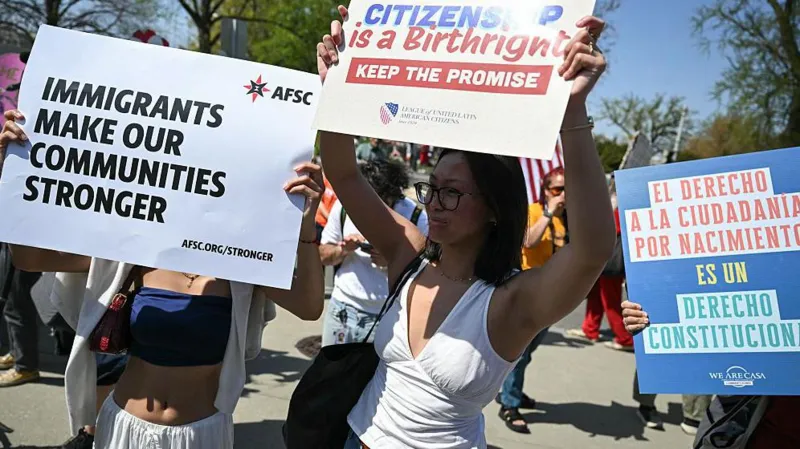
The US Supreme Court has ruled that children born in the United States are automatically American citizens, even if their parents are living in the country without legal status or are staying temporarily. The decision protects a constitutional right that has existed for more than 150 years and blocks former President Donald Trump’s attempt to change the policy through an executive order.
The court delivered the decision with a 6 to 3 majority. Chief Justice John Roberts wrote that the 14th Amendment guarantees citizenship to children born in the United States, including those whose parents are in the country unlawfully or on temporary visas.
Supreme Court Reaffirms the 14th Amendment
The ruling centers on the Citizenship Clause of the 14th Amendment, which has granted birthright citizenship since 1868. The amendment states that anyone born in the United States and subject to its jurisdiction is a citizen.
In the majority opinion, Chief Justice Roberts explained that the amendment was designed to give every child born in the country equal protection under the Constitution. He added that citizenship remains one of the most important rights in American democracy.
The decision continues a long standing legal interpretation that has been supported by previous Supreme Court rulings.
Trump’s Executive Order Rejected
Donald Trump argued that children born to undocumented immigrants and some temporary visitors should not automatically receive US citizenship. His administration claimed that these children were not fully subject to the jurisdiction of the United States under the Constitution.
The Supreme Court rejected that argument and ruled that the Constitution protects birthright citizenship for these children. The judgment is seen as a major setback for Trump’s immigration policy.
After the ruling, Trump criticized the decision on Truth Social. He called it disappointing and urged Congress to pass legislation aimed at ending birthright citizenship. He argued that lawmakers could change the policy without introducing a constitutional amendment.
Three Justices Disagreed
Three conservative justices opposed the majority decision.
Justice Clarence Thomas argued that the 14th Amendment was originally written to protect formerly enslaved people and should not be interpreted to grant citizenship to children of people without legal immigration status.Justice Samuel Alito also disagreed with the ruling.
Justice Neil Gorsuch joined the dissenting opinion.
Civil Rights Groups Welcome the Decision
Civil rights organizations praised the ruling and described it as an important victory for constitutional rights and equal treatment under the law. Supporters believe the decision protects millions of children and preserves a principle that has been part of American law for generations.
White House Chief of Staff Stephen Miller strongly criticized the judgment. In a post on X, he described it as one of the most damaging Supreme Court decisions in US history.
What This Means
The ruling confirms that birthright citizenship remains protected under the US Constitution. Any future effort to change this policy would likely require a constitutional amendment or a major shift in constitutional interpretation.