
Why the U.S. Must Escalate Its Fight Against Mexican Cartels After El Mencho’s Death
A Major Blow to a Powerful Cartel
In late February, Mexican special forces, working with U.S. intelligence, tracked down and killed Nemesio Oseguera Cervantes, better known as El Mencho. He led the brutal Jalisco New Generation Cartel, often called CJNG, one of the most violent drug syndicates operating today.
The operation marked a significant moment in President Donald Trump’s crackdown on cross border drug trafficking. Supporters see it as proof that direct action can weaken cartel leadership. Still, removing one kingpin does not dismantle the wider network.
The Scale of the Threat
Six dominant Mexican cartels control much of the illegal drug flow into the United States. Among them, CJNG built a multibillion dollar enterprise fueled by fentanyl, methamphetamine, and cocaine. Its operations rely on intimidation, public executions, kidnappings, and corruption.
The financial power behind these groups allows them to maintain distribution cells across all 50 states. Since 1999, drug overdoses tied largely to cartel supply chains have killed more than one million Americans. The opioid epidemic alone has claimed more lives than many of the nation’s wars combined.
The current administration has labeled major cartels as foreign terrorist organizations. That designation reflects a shift in tone. It frames the crisis not just as a law enforcement challenge, but as a national security emergency.
Supply Drives the Crisis
For years, some policymakers argued that American demand fuels the drug trade. However, evidence shows that surges in supply often create new waves of addiction. Cartels flood communities with cheap synthetic opioids, especially fentanyl. They press the drug into pills that resemble prescription medicine, which makes the risk harder to detect.
In addition, traffickers use social media to target teens and young adults. These tactics expand the market rather than simply serving existing users. As supply increases, overdose deaths tend to rise in step.
Beyond a Single Strike
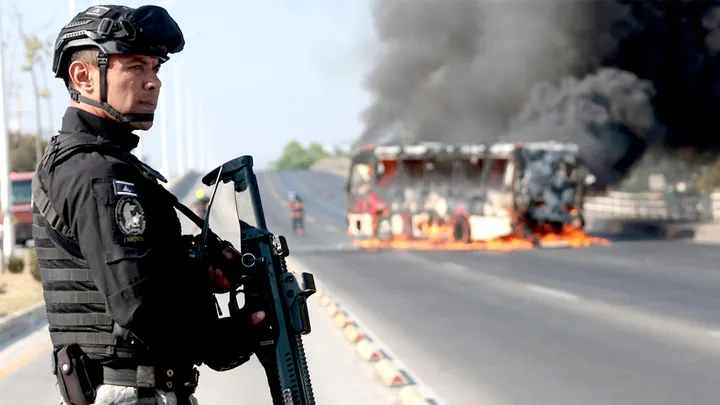
While El Mencho’s death weakens CJNG, cartels adapt quickly. Retaliatory violence followed almost immediately, including attacks on security forces in Mexico. History shows that removing one leader rarely destroys an organization built on deep financial reserves and layered command structures.
A lasting strategy must go further. Authorities need to disrupt money laundering, chemical supply routes, weapons trafficking, and the corruption that shields cartel operations. Without attacking those foundations, leadership losses alone will not bring long term change.
A Broader Moral and National Debate
The drug trade has drained billions from the U.S. economy through health care costs, law enforcement spending, and lost productivity. More importantly, it has devastated families and communities across the country.
The argument now centers on how far the United States should go in confronting these organizations. Some call for sustained military, intelligence, and diplomatic pressure. Others warn about escalation and sovereignty concerns.
What remains clear is the scale of the damage. The fight against cartel driven drug trafficking is no longer only about crime. It touches national security, public health, and the future of vulnerable communitiesA Major Blow to a Powerful Cartel
In late February, Mexican special forces, working with U.S. intelligence, tracked down and killed Nemesio Oseguera Cervantes, better known as El Mencho. He led the brutal Jalisco New Generation Cartel, often called CJNG, one of the most violent drug syndicates operating today.
The operation marked a significant moment in President Donald Trump’s crackdown on cross border drug trafficking. Supporters see it as proof that direct action can weaken cartel leadership. Still, removing one kingpin does not dismantle the wider network.
The Scale of the Threat
Six dominant Mexican cartels control much of the illegal drug flow into the United States. Among them, CJNG built a multibillion dollar enterprise fueled by fentanyl, methamphetamine, and cocaine. Its operations rely on intimidation, public executions, kidnappings, and corruption.
The financial power behind these groups allows them to maintain distribution cells across all 50 states. Since 1999, drug overdoses tied largely to cartel supply chains have killed more than one million Americans. The opioid epidemic alone has claimed more lives than many of the nation’s wars combined.
The current administration has labeled major cartels as foreign terrorist organizations. That designation reflects a shift in tone. It frames the crisis not just as a law enforcement challenge, but as a national security emergency.
Supply Drives the Crisis
For years, some policymakers argued that American demand fuels the drug trade. However, evidence shows that surges in supply often create new waves of addiction. Cartels flood communities with cheap synthetic opioids, especially fentanyl. They press the drug into pills that resemble prescription medicine, which makes the risk harder to detect.
In addition, traffickers use social media to target teens and young adults. These tactics expand the market rather than simply serving existing users. As supply increases, overdose deaths tend to rise in step.
Beyond a Single Strike
While El Mencho’s death weakens CJNG, cartels adapt quickly. Retaliatory violence followed almost immediately, including attacks on security forces in Mexico. History shows that removing one leader rarely destroys an organization built on deep financial reserves and layered command structures.
A lasting strategy must go further. Authorities need to disrupt money laundering, chemical supply routes, weapons trafficking, and the corruption that shields cartel operations. Without attacking those foundations, leadership losses alone will not bring long term change.
A Broader Moral and National Debate
The drug trade has drained billions from the U.S. economy through health care costs, law enforcement spending, and lost productivity. More importantly, it has devastated families and communities across the country.
The argument now centers on how far the United States should go in confronting these organizations. Some call for sustained military, intelligence, and diplomatic pressure. Others warn about escalation and sovereignty concerns.
What remains clear is the scale of the damage. The fight against cartel driven drug trafficking is no longer only about crime. It touches national security, public health, and the future of vulnerable communities