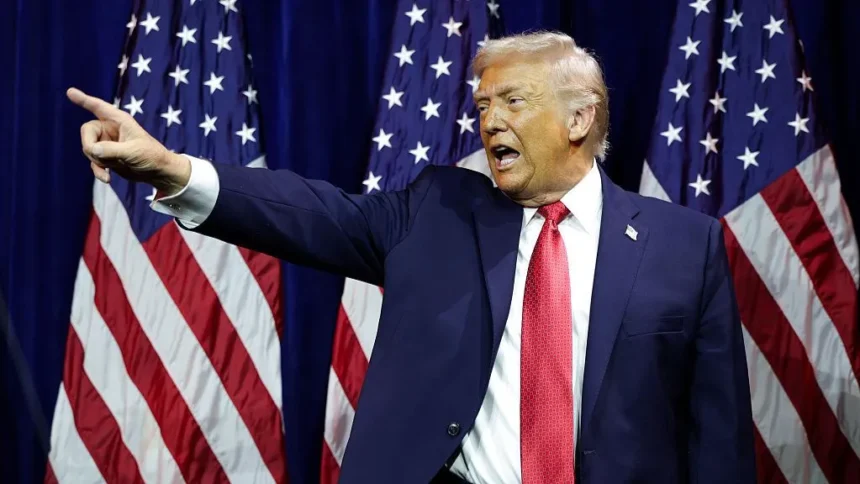
US President Donald Trump has pulled the US out of dozens of international organisations, including many focused on climate change. Nearly half of the 66 affected bodies are linked to the UN, such as the UN Framework Convention on Climate Change (UNFCCC), the treaty that guides global efforts to tackle warming.
The withdrawals also target organisations working on development, gender equality, and conflict areas that the Trump administration has repeatedly criticized as advancing “globalist” or “woke” agendas.
The White House said the decision reflects that these entities “no longer serve American interests” and pursue “ineffective or hostile agendas.”
White House Statement on the Withdrawals
The memorandum was signed on Wednesday following a government review. The White House described the organisations as a “waste of taxpayer dollars” and said ending US participation would stop funding entities that advance globalist agendas over US priorities.
It also claimed many groups promote “radical climate policies, global governance, and ideological programs that conflict with US sovereignty and economic strength.”
Key Climate Organisations Affected
Alongside the UNFCCC, the US has withdrawn from the Intergovernmental Panel on Climate Change (IPCC), the leading authority on climate science. Sources within the IPCC expressed concern about the withdrawal’s impact on US scientists contributing to upcoming reports.
The White House has already blocked US scientists from attending a meeting in China. Such restrictions could delay future IPCC reports, including critical guidance on climate mitigation.
Other Non-UN Groups Impacted
The withdrawal also affects non-UN organisations focused on clean energy, democratic governance, and international security. These include the International Solar Alliance, the International Institute for Democracy and Electoral Assistance, and the Global Counter-Terrorism Forum.
Trump has previously defunded or criticized multilateral organisations and rejected the scientific consensus on human-caused climate change, calling it a “hoax.”
Legal and Political Implications
It will take a year for the US to fully withdraw from the UNFCCC. In practice, the US has largely ceased active participation in the UN climate body.
It is unclear whether this move could face challenges in US courts. While the Constitution allows presidents to join treaties with Senate approval, it does not specify withdrawal procedures, leaving future presidents uncertain about reversing the decision.
Wider Context of Withdrawals
These latest withdrawals follow Trump pulling the US out of the Paris Climate Agreement for a second time and skipping the COP30 climate summit in Brazil. The US has also left the World Health Organization, the UN Human Rights Council, and UNESCO.
Global and Domestic Reactions
European leaders criticized the decision, warning it could weaken global cooperation. EU Climate Commissioner Wopke Hoekstra called the UNFCCC the foundation of global climate action and described the US retreat as “regrettable and unfortunate.”
Teresa Ribera, the EU’s vice-president for clean transition, said the administration showed little concern for the environment, health, or human suffering.
In the US, advocacy groups condemned the step. Rachel Cleetus of the Union of Concerned Scientists described it as a “new low,” calling the administration “authoritarian” and “anti-science,” prioritizing political ideology over people’s well-being and global stability.