Gamers who are blind or partially sighted are urging the video game industry to do more to make games inclusive. The call comes from a group founded by the Royal National Institute of Blind (RNIB) to connect players who share a passion for gaming.
Personal Stories: Gaming with Limited Vision
Tiernán Devine, 21, from Belfast, is blind. He enjoys audio text-based games on mobile devices but wishes for more accessible console titles.
“I love fantasy games with strong stories and excellent audio,” he said. “Games with detailed audio descriptions let me experience the world fully.”
Tiernán lost vision in his left eye at birth and in his right eye as a teenager. He recalls enjoying games like Mario Kart on the Nintendo DS before losing sight completely.
He suggested that game developers include visually impaired players in beta testing. “Many of us use screen readers. Adding a voiceover to games could make them playable without changing the core experience,” he said.
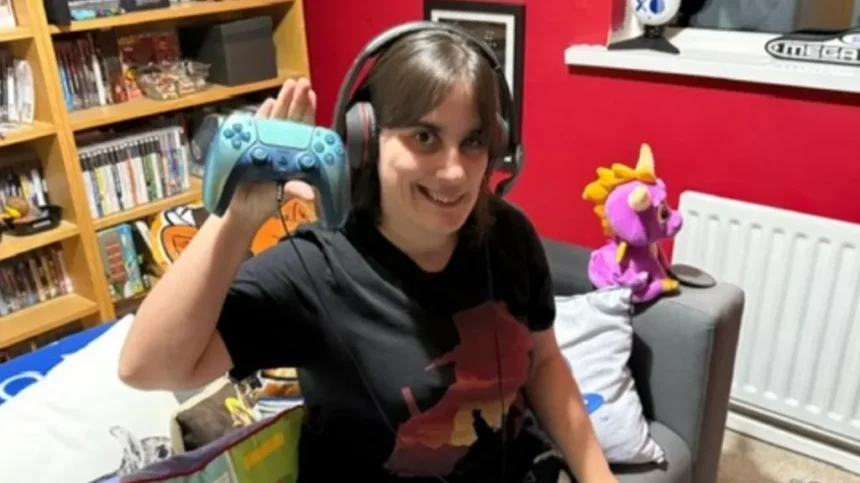
Louise Meeke, from County Down, has cerebral palsy and is partially sighted. She enjoys PlayStation 5 games like Crash Bandicoot and Minecraft, but often adjusts TV contrast settings to see visuals.
“It would be amazing if games had presets for different levels of vision,” Louise said. She described the RNIB gaming group as a “second family” and a vital source of social support.
Accessibility: Progress and Remaining Challenges
Gaming is now a global pastime, with around three billion players. The industry is worth more than the film and music sectors combined. In the UK alone, it employs approximately 76,000 people and generates £6 billion annually.
The Association for UK Interactive Entertainment (UKIE) said the industry has invested millions in accessible design. “Progress has been made, but blind and partially sighted players still face barriers,” UKIE said.
Some recent games, such as Assassin’s Creed Shadows, EA Sports FC 26, and DOOM: The Dark Ages, have raised accessibility standards. The trade body highlighted that around 250 million gamers worldwide are visually impaired, making accessibility both a commercial and ethical priority.
The Path Forward
Industry leaders are encouraged to continue improving accessibility through inclusive design, voiceovers, adaptable visuals, and testing with visually impaired players. The goal is to ensure that everyone can enjoy the social and creative aspects of gaming.