The Bahamas have been racing toward energy security and catastrophe resilience while a severe El Niño reduces the Atlantic hurricane season to record lows. The globe and the Caribbean may learn from it.
The calm times are when the main work is done. There are no urgent emergencies when there are no storms. The Caribbean can get ready for the more powerful storms that are approaching during this lull, such as this year’s exceptionally quiet Atlantic hurricane season due to the biggest El Niño on record.
Quick Facts
| What Happened | The Bahamas is expanding renewable energy through solar powered microgrids. |
|---|---|
| Location | Abaco Islands, The Bahamas, Caribbean |
| When | Following Hurricane Dorian in 2019 |
| Key Organisations | Rocky Mountain Institute, Bahamas Power and Light, and local partners. |
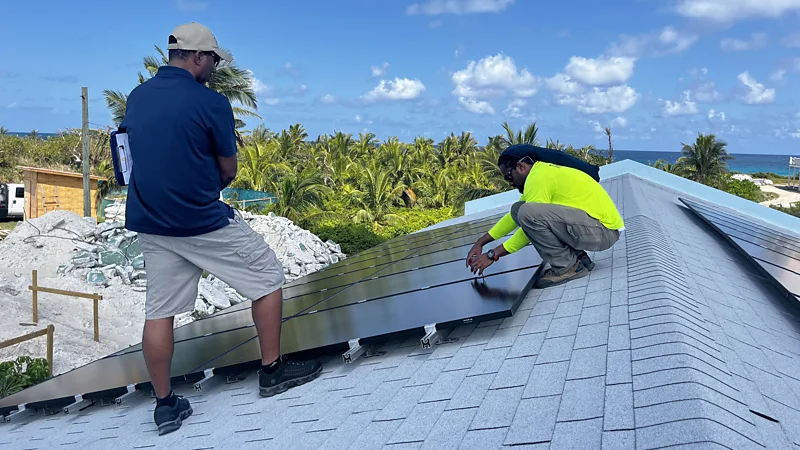
| Current Development | Three Abaco primary schools have solar panels and battery storage systems. |
| Energy Generated | The systems supply an average of 90% of the schools' daily electricity needs. |
| Why It Matters | Microgrids improve energy security, reduce fuel dependence and support hurricane preparedness. |
Caribbean Islands Prepare for Energy Independence
“One lesson many of us have learned is the islands that use the quieter years to prepare are often the ones that recover most effectively,” says David Gumbs, an Anguillan who has dedicated a significant portion of his professional life to bringing renewable energy to the Caribbean, especially the Bahamas.
The race to construct renewable infrastructure—not simply to become hurricane-resistant but also energy self-sufficient—is a crucial component of this preparation throughout the Caribbean. Bahamians frequently pay some of the highest energy rates in the world due to pricey diesel generators, which have increased by an average of 33% in only one year.
Hurricanes Spur Caribbean Renewable Energy Transition
The Bahamas has now started a real-time experiment to see if a small island nation can overcome an antiquated fossil fuel system and whether energy security and climate resilience can be developed in the wake of a natural disaster.
Gumbs is more aware than most of the significance of storm preparedness. When Irma, a Category 5 storm, hit Anguilla in 2017 and destroyed 90% of the island’s electrical infrastructure, he sought refuge in his toilet.Half of my team members had damaged or entirely destroyed houses, and my own was in ruins.
Bahamas Turns to Resilient Renewable Microgrids
The Bahamas have had three significant hurricanes in the last ten years, and the Caribbean is extremely vulnerable to catastrophic weather.
Hurricane Dorian, which devastated the Bahamas two years after Irma, was the strongest storm ever recorded and one of the most catastrophic natural catastrophes in the nation’s history.
Following Dorian, the islanders had to decide whether to attempt something new or restore the outdated, expensive, and unreliable diesel-dependent energy infrastructure. “People wanted to rebuild better,” says Gumbs, who has established microgrids in the Bahamas for a considerable amount of time. These are local, tiny networks that have the capacity to produce power.
A grid that wasn't working
The Bahamas’ electricity grid underwent a sea change as a result of Hurricane Dorian. Before residents could re-connect to the main grid, Bahamas Power and Light, the primary utility firm, had to “rebuild from scratch” and it took two years. The economy collapsed, and schools and hospitals were demolished.
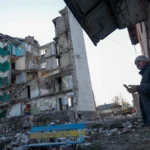
Along with neighboring Grand Bahama, Abacos, a sequence of islands surrounded by palm trees in the northern Bahamas, suffered the worst damage, with thousands of homes destroyed. There were 74 fatalities, 282 unaccounted-for individuals, and 70,000 homeless people. They “ransacked” the Abacos’ energy infrastructure.
Beacons in the dark
The Bahamian government asked energy firms to create long-term energy solutions for the islands of Eleuthera and Abaco in the wake of Irma and Dorian. Prime Minister Philip Davis stated at the time, “Continue down a path of expensive, unreliable energy or pivot toward a future where energy is sustainable, affordable, and secure.”
Three Abaco schools have microgrid systems that double as storm shelters and supply 90% of their electricity using solar and storage batteries. Up to five power outages per day were occurring at one school; the new technology has made it possible for classes to go on without interruption.
'Islanding': From vulnerability to strength
Compared to the previous system, the new microgrids provide a number of advantages, especially during severe weather. In addition to being expensive, fuel must be transported by boats, which are unable to reach the islands during severe weather.
Many tiny island villages “depend on a single centralized power station or fragile transmission links, meaning one damaged line can leave entire communities without electricity for days or even weeks,” Mustafa adds.
The major Abaco power plant mostly survived Dorian; however, the power cables were devastated, making it unable to provide inhabitants with energy.