It may have seemed ironic to some that the primary source of global warming, fossil fuels, should be the reason behind the failure of the largest climate change conference in history.
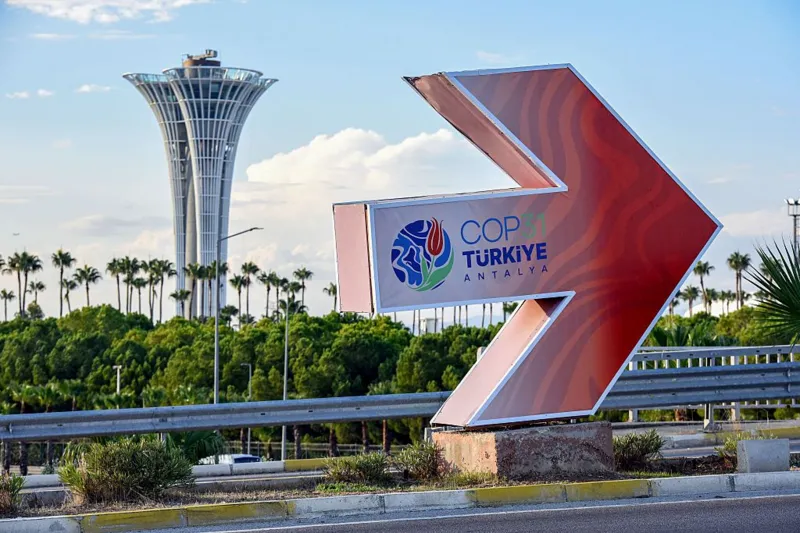
However, that is what took place on Sunday in Antalya, Turkey.
We can learn something about the condition of climate diplomacy from this failure. However, it could provide insight into the increasingly polarized society where the discussions are being held.
“The most complicated and fraught geopolitical environment in living memory” was described by Australian minister Chris Bowen, who oversaw the discussions. He said that the conflicting demands had turned into “unbridgeable red lines”.
Quick Facts About COP31 Failure
| Detail | Information |
|---|---|
| Event | COP31 Climate Summit |
| Location | Antalya, Türkiye |
| Date | November 2026 |
| Main Issue | Failure to reach agreement on the proposed climate declaration |
| Key Disagreement | Fossil fuels, climate finance and energy security |
| Key Participants | Developed nations, developing countries and oil producing states |
| Major Concern | Growing divisions in international climate cooperation |
Fossil Fuels Divide Climate Negotiations
The summit’s president and Turkey’s environment minister, Murat Kurum, was more direct. He said that governments shouldn’t become “hung up on one word or phrase” in order to let down those who are yearning for climate action.
Kurum was right. A deal to move away from fossil fuels was reached at COP28 in Dubai three years ago. They were not mentioned at all in the planned Antalya Pact.
So, was giving up the agreement over two words really worth it?
The nations that rejected it said that the distinction was essential. They contended that pledges to cut greenhouse gas emissions differed greatly.
At these gatherings, it is typically hard to pinpoint exactly who said what. Governments are sometimes unwilling to acknowledge whatever ideas they have resisted, and a large portion of the negotiating occurs behind closed doors.
This time, there was some public pushback, mostly from countries that produce oil.
Speaking on behalf of the 22 Arab League states, Saudi negotiator Mohammad Ayoub claimed that Arab countries had contributed less than 2% of historical greenhouse gas emissions. He said that it was affluent, industrialized countries.
He supported the freedom of Arab nations to address climate change in a way that best suits their unique national contexts.
Geopolitical Rivalries Undermine Climate Cooperation
Sergei Kononuchenko, the delegate from Russia, went farther. He cautioned that reducing oil and gas supply before demand declined would result in shortages, increased costs, and energy poverty.We are unable to accept any fossil fuel composition because of this,” he stated.
The US did not have a formal delegation in Antalya, although having assisted in mediating concessions in earlier rounds of negotiations, often in collaboration with China. The entire international climate process has been rejected by President Donald Trump.
The goals being addressed in the negotiation rooms seemed to be significantly different from those of some of the most powerful nations in the world.
A majority that may yet offer hope
However, the image can be more hopeful than it seems. A desire for clear wording on transitioning away from fossil fuels was supported by almost 130 governments, or about two-thirds of the nations represented in Antalya.
Leading the UN discussions that resulted in the Paris Agreement, Christiana Figueres contended that nations had a right to withdraw rather than support a less robust political commitment that may jeopardize the gains previously achieved.
When seen in this light, the collapse does not prove that people are no longer motivated to take action on climate change. On the contrary, a sizable majority of governments were calling for more aggressive measures.
Climate Finance and Historical Injustice
So instead of waiting for the nations that are determined to obstruct them, why not just figure out a method for them to proceed?
When you look past the controversy around fossil fuels, the challenge becomes more apparent.
Climate financing was one of Kononuchenko’s other targets. He bemoaned the fact that a large portion of the funds that wealthier nations give to less developed countries are loans rather than grants. According to him, emerging nations eventually paid back.He said, “This is an old colonial distribution of labor under a new banner.”
Then, at a startling moment, he leaned over to the microphone and began speaking in English instead of Russian.
Climate Action Beyond Political Agreements
On paper, voting may result in more ambitious accords, but would it convince the outvoted states to take action? Smaller and less developed countries that may otherwise be subjugated by the most powerful nations are also somewhat protected by consensus.
The competitiveness of solar panels, batteries, and electric cars is rising, and the volatility of the world’s oil and gas supply is providing nations with yet another incentive to produce their own power instead of relying on imported fossil fuels.
Regardless of what occurs in the UN negotiation halls, the energy transformation is proceeding.