
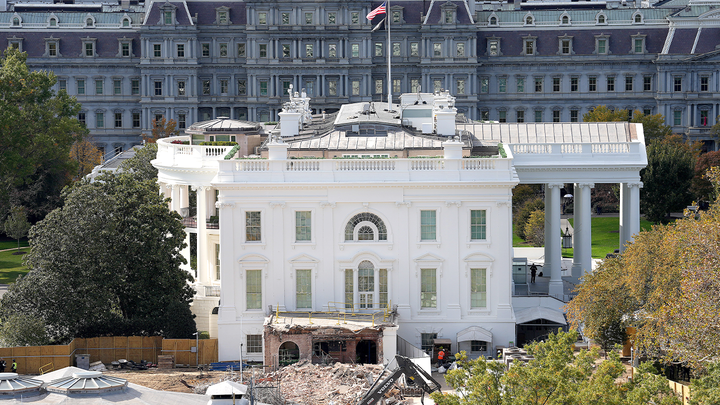
East Wing removal defended by White House officials
The White House has said the demolition of the East Wing could not be avoided because the structure had major safety and maintenance problems. Officials explained that repairs would have cost more over time than rebuilding the area entirely.
Josh Fisher, director of the White House Office of Administration, told the National Capital Planning Commission that engineers found several issues. These included an unstable colonnade, long term water leaks, and widespread mold. According to Fisher, these problems made renovation impractical and risky. He said rebuilding offered the most reliable and cost effective solution for the future.
Ballroom project moves forward despite criticism
The demolition is tied to President Donald Trump’s plan to construct a large ballroom on the east side of the White House. The project is expected to cost around four hundred million dollars and will be privately funded, according to Trump.
Will Scharf, chairman of the planning commission and also a White House official, said he expects the project to receive final approval. He argued that the White House lacks a proper indoor space for hosting major events. Scharf noted that visiting leaders, including figures like King Charles III, are often entertained in outdoor tents, which he said was not suitable for high level state functions.
Legal challenge and preservation concerns
In December, the National Trust for Historic Preservation filed a lawsuit seeking to stop construction of the ballroom. The group accused the administration of skipping required reviews and failing to secure congressional approval before tearing down the East Wing.
Carol Quillen, the Trust’s president and chief executive officer, said the latest briefing was a positive step. However, she urged the White House to fully follow all legal review and approval processes before moving ahead with construction.
Design plans and possible changes
Architect Shalom Baranes, selected by Trump to lead the next phase of the project, presented early designs and visual plans to the commission. These showed how the new ballroom would fit into the existing White House complex.
Baranes suggested one possible option could be adding a second story to the West Wing colonnade to better balance the overall look. He warned, though, that such a change would heavily affect the area outside the Oval Office.
Questions raised by commission members
Phil Mendelson, a Democratic member of the commission and chairman of the D.C. Council, raised concerns about the ballroom’s scale. He said the proposed ceiling height of nearly forty feet might overpower the historic building. Mendelson also questioned why the commission was not consulted earlier, before the East Wing was demolished last October.
Baranes responded that design adjustments were still possible, but stressed that the plans had already gone through internal reviews.
Additional changes around the White House
Beyond the ballroom, officials said the project would improve visitor access and include upgrades near Lafayette Park. A more formal review process, including public input and voting, is expected once the White House submits detailed plans.