The Department of Energy’s Oak Ridge National Laboratory (ORNL) has launched a four-year research collaboration to advance understanding of nonequilibrium quantum materials. The project leverages high-performance computing (HPC) and exascale supercomputers to model quantum systems pushed far from equilibrium. The program, called Controlled Numerics for Emergent Transients in Nonequilibrium Quantum Matter (CONNEQT), addresses long-standing challenges in predicting the dynamic behavior of quantum materials under realistic conditions.
Why Nonequilibrium Quantum Materials Matter
In real-world environments, materials are rarely at rest. Light, heat, electric currents, magnetic fields, and energy flow constantly disturb them. For quantum materials, these disturbances can dramatically change electronic and magnetic properties, sometimes revealing hidden behaviors. Understanding these materials is crucial for quantum computing, microelectronics, sensing, and information processing. By intentionally driving materials out of balance, scientists hope to engineer new quantum states and control exotic phenomena on demand.
A National Collaboration with Global Ambitions
ORNL leads the CONNEQT effort, joined by Los Alamos, Lawrence Berkeley, SLAC National Accelerator Laboratory, and the University of Tennessee, Knoxville. The collaboration blends physics, applied mathematics, and computer science to tackle the challenge of simulating nonequilibrium quantum behavior across realistic time and length scales. Bridging this gap is critical to turning lab discoveries into practical technologies.
Exascale Supercomputing Powers Discovery
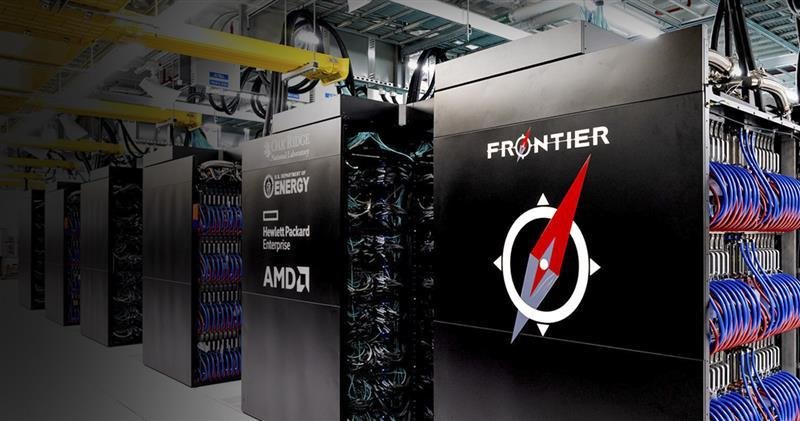
Central to CONNEQT is the use of exascale supercomputers, including Frontier at ORNL, the world’s first system to exceed the exascale threshold. These machines perform over a billion-billion calculations per second, enabling simulations that were previously impossible. Researchers will model strongly interacting quantum systems, such as unconventional superconductors and quantum spin liquids, which exhibit complex many-body effects.
Three Core Research Pillars
Over the next four years, CONNEQT focuses on three objectives:
- Controlled computational frameworks to study interacting electrons under external forces.
- Advanced mathematics and computer science techniques to accelerate simulations of complex dynamical systems.
- Exascale modeling to uncover how collective electronic interactions create transient patterns and emergent behavior.
Together, these efforts aim to redefine quantum materials modeling.
Implications for Energy and Innovation
The project is supported by DOE’s Scientific Discovery through Advanced Computing (SciDAC) program, funded by the Office of Science’s Advanced Scientific Computing Research and Basic Energy Sciences divisions. It aligns with DOE’s Genesis Mission, aiming to build the world’s most powerful scientific ecosystem for discovery.