Immigration Officers Stop Residents in Minneapolis
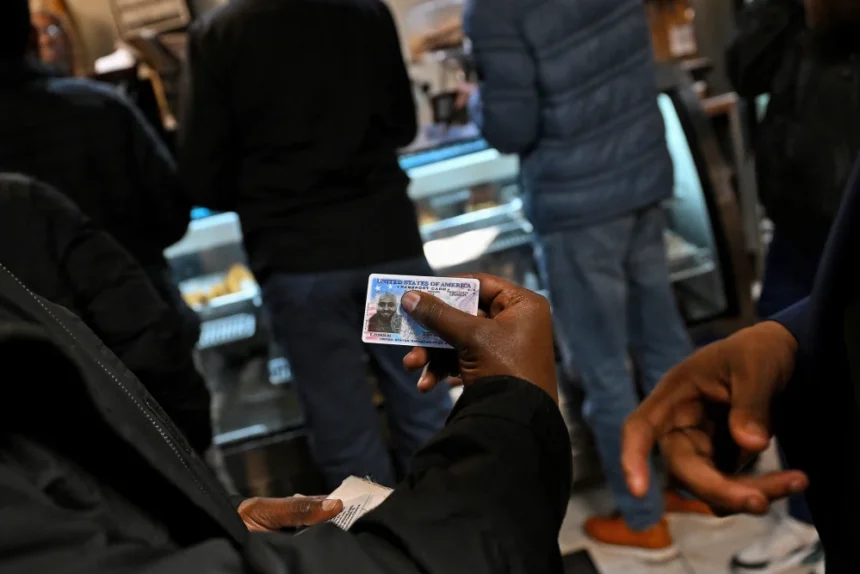
Immigration officers in Minneapolis and nearby areas have been approaching people, asking for proof of U.S. citizenship. Residents say officers sometimes stop individuals at random and question them about their status. Many encounters have been recorded and shared on social media.
Podcaster Joe Rogan, a Trump supporter, reacted online, asking, “Are we really going to be the Gestapo?”
Case of Gage Diego Garcia
Gage Diego Garcia said officers detained him for six hours in Columbia Heights, Minnesota, after he leaned into a friend’s car. He told NBC News the officers approached aggressively and demanded his ID.
“When I refused, they got angry and grabbed me,” Garcia said. Video shows officers pushing him against a car and pointing a Taser at him. Officers accused him of assault after he blew a whistle around his neck.
During the encounter, officers found Garcia’s firearm. He explained it was fully registered because he is a U.S. citizen. Officers allegedly told him, “You are a f—ing citizen, you shouldn’t have done that,” though it is unclear what action they were referring to.
While being transported to the Whipple Building in Minneapolis, Garcia said officers admitted he was stopped because he resembled a suspect. When he asked what crime, they reportedly said, “We’ll figure it out.”
He also referenced the fatal shooting of Renee Good, a U.S. citizen, warning him how things “could have gone really south.”
DHS Response
The Department of Homeland Security (DHS) defended the stops. Spokesperson Tricia McLaughlin said Garcia fled on foot, giving officers “reasonable suspicion.” She claimed he became “extremely hostile” and assaulted an officer by spitting.
McLaughlin cited a September 2025 Supreme Court ruling that allows immigration officers to consider race, ethnicity, and language in patrols. Opponents say this could enable racial profiling.
She emphasized that DHS enforces immigration laws “without fear, favor or prejudice.”
Legal Perspective
David Schultz, a law professor at Hamline University, said U.S. citizens do not need to provide ID or prove citizenship while in public.
“We have a First Amendment right of association,” he explained. Citizens may ask why they are being stopped and whether they are free to leave. Schultz advised remaining calm, as shown by Nimco Omar’s encounter.
Encounters Across Minneapolis
Omar said she was walking after parking her car when masked officers ran toward her. They asked for her citizenship and threatened to put her in a vehicle if she did not show ID. She refused, calmly stating she was a U.S. citizen.
Other stops have occurred. One man pumping gas was asked repeatedly about his citizenship. Another was questioned at a vehicle charging station. DHS has not confirmed the citizenship of those approached.
Context and Numbers
Rep. Ilhan Omar, D-Minn., said her son was also stopped and asked about his status. DHS reported no record of that encounter.
The Trump administration has deployed about 3,000 officers to Minneapolis, a city of 430,000. Much of the enforcement focuses on south Minneapolis, where Renee Good was fatally shot.
Guidance for Citizens
Schultz emphasized that citizens should stay composed, ask why they are stopped, and confirm if they are under arrest. If not, they can ask if they are free to leave.
He noted that when driving, showing a driver’s license is required if pulled over. However, citizens are not required to answer questions about their citizenship in public spaces, except in states with specific laws that allow questioning immigration status.