
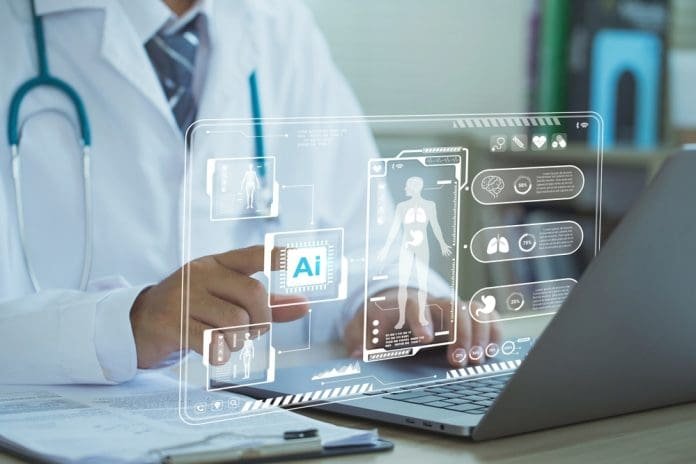
AI in healthcare: Transforming medicine and patient care
Artificial intelligence (AI) is changing healthcare. Hospitals, clinics, and research institutions now use AI to detect diseases, manage patients, and support clinical decisions. The goal is clear: better outcomes, more efficient care, and greater equity.
Here, we explore how AI is reshaping medicine, from early disease detection to ethics and the future of care.
Early disease detection with AI
AI can spot illnesses before symptoms appear. Unlike traditional screenings, AI models analyse medical images and clinical data for subtle patterns humans might miss.
For example, a collaboration between Bristol Myers Squibb and Microsoft uses AI to examine X-rays and CT scans for early lung cancer detection. Similarly, UK trials are using AI to screen mammograms, helping radiologists identify breast cancer sooner.
In India, AI models predicted chronic kidney disease with nearly 99% accuracy in high-risk areas. Early detection allows faster intervention, improving survival rates and quality of life.
Machine learning enhances diagnostic accuracy
AI can process massive datasets from imaging, genetics, and health records to deliver precise diagnoses. Techniques like federated learning enable multiple institutions to train models while preserving patient privacy.
Deep learning systems interpret X-rays, MRIs, CT scans, and pathology slides, highlighting abnormalities that humans might overlook. Natural language processing tools also extract insights from clinical notes, reducing clinician workload and improving documentation.
These advances support personalised medicine, aligning treatments with each patient’s unique biology and history.
Predictive analytics for smarter hospital care
Predictive analytics uses historical and real-time data to forecast health events. Hospitals employ these models to identify patients at risk of deterioration, complications, or readmission.
Studies show predictive models can reduce readmissions by up to 24%, enabling targeted post-discharge care. Hospitals can also forecast ICU demand, helping allocate resources efficiently and prevent shortages.
By turning data into actionable insights, AI helps hospitals act proactively instead of reactively.
Reducing readmissions and optimising care
AI assesses clinical histories, treatments, and lifestyle factors to flag patients at high risk of readmission. Care teams can intervene early with education, follow-ups, or tailored care plans.
Wearables and remote monitoring devices further support post-discharge care, alerting providers to potential issues in real time. These approaches improve patient outcomes and reduce strain on healthcare facilities.
AI-powered diagnostics: Supporting clinicians
AI now aids many clinical specialties. Radiology uses AI to prioritise urgent cases, detect anomalies, and suggest potential diagnoses based on millions of prior images.
Other AI models predict risks for conditions like sepsis, providing early warnings that reduce mortality and shorten ICU stays.
These tools complement clinicians rather than replace them, enhancing judgement and workflow efficiency.
Ethics and accountability in AI healthcare
AI systems reflect the data they are trained on. Biases in these datasets can worsen existing care disparities.
Health equity advocates push for “equity-first” standards, algorithm transparency, community involvement, and ongoing bias audits. Ethical deployment also ensures privacy, human oversight, and explainable AI decisions.
Initiatives like FUTURE-AI provide guidelines for trustworthy medical AI, focusing on fairness, usability, and robustness.
The future of AI in healthcare
AI’s future lies in collaboration with clinicians. Emerging technologies, such as generative AI, real-time monitoring, and precision medicine, promise predictive, personalised care.
AI-powered wearables and telemedicine can expand access to remote and underserved areas. Achieving this future requires strong ethical frameworks, validated AI models, and ongoing clinician education.
Responsible AI integration will drive early detection, improved diagnosis, personalised treatment, and more efficient health systems — improving outcomes for all.