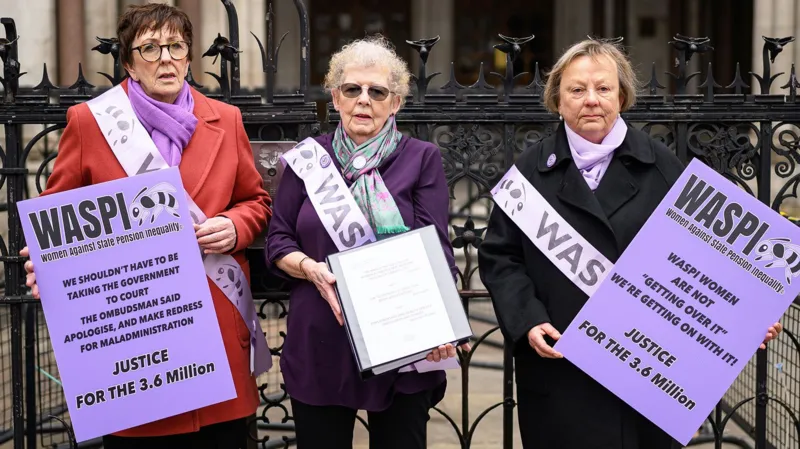
Women affected by the changes to the state pension age have reacted with anger after the government once again rejected calls for compensation. The move comes after ministers reviewed the case following the discovery of a new document but decided not to provide any payouts.
3.6 Million Women Impacted
Campaigners say 3.6 million women born in the 1950s were not properly informed about the rise in their state pension age, which was raised to match men. The Women Against State Pension Inequality (WASPI) group described the government’s latest decision as showing “utter contempt” for those affected.
Angela Madden, chair of WASPI, told News that the decision was “appalling.” She added, “We know it’s a political choice. The government could pay us if it wanted. We’re not afraid of legal action.”
Government Defends Its Decision
The government claims that most women born in the 1950s were aware of the pension age changes due to public information campaigns. These included leaflets, education campaigns, messages in GP surgeries, TV and radio coverage, cinema adverts, and online materials. Despite this, some women said they were unaware of the changes.
In 2024, the Parliamentary and Health Service Ombudsman (PHSO) recommended compensation ranging from £1,000 to £2,950 per person. However, the PHSO can only make recommendations, not enforce them, and the government rejected the proposal.
Work and Pensions Secretary Pat McFadden acknowledged that individual letters about the changes could have been sent earlier. He reiterated the apology issued by former minister Liz Kendall. However, McFadden emphasized that most women did not suffer direct financial loss due to the delayed letters.
Cost and Practicality Concerns
The discovery of a 2007 survey prompted the government to review its stance. After checking for other overlooked documents, ministers concluded that a flat-rate compensation scheme could cost up to £10.3 billion. They argued it would not be fair to pay women who were already aware of the changes. The government also said creating an individual compensation system would be impractical.
McFadden noted that evidence suggests most women would not have read an unsolicited pensions letter, even if it had arrived earlier. He added that those who knew the least about pensions—the women who most needed to read the letters—were the least likely to do so.
Public Reaction
Pat Pollington, 71, said the changes forced her to work longer than expected. She described the government’s handling of the issue as a “fiasco” and criticized its priorities.
Political leaders also weighed in. Conservatives accused the government of “cynical politics,” while Liberal Democrat spokesperson Steve Darling said women affected feel “utterly betrayed.” Ann Davies, MP for Plaid Cymru, added that an apology without compensation is not justice, calling the pension changes “poorly communicated, rushed, and fundamentally unfair.”