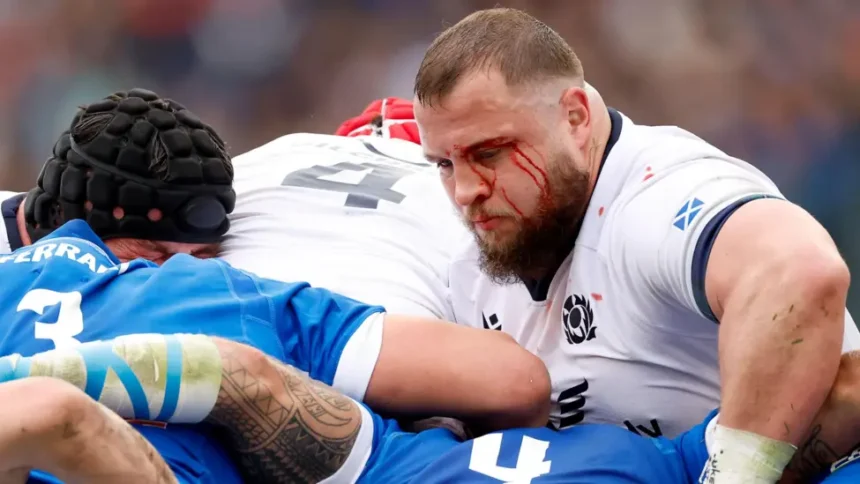
Pierre Schoeman, Scotland’s experienced prop, has a way with words. He doesn’t just play rugby; he paints vivid pictures about what it means to be a prop. From comparing looseheads and tightheads to Vikings and gladiators, to describing their teamwork as like “migrating bison,” his unique perspective gives rare insight into the game.
As the Six Nations approaches, Schoeman returns to animal imagery. “Unlock the gorilla in the cage. It has to come out,” he says.
The Primal Appeal of Playing Prop
Schoeman admires his fellow props for their primal instincts. “We know we’re underrated for our intellectual abilities,” he says.
He highlights the toughness of their role: picking up a rugby ball and running into collisions repeatedly is no small feat. “That’s how we put bread on the table. Sometimes steak too, especially if we win,” he adds.
Describing the first scrum in Rome, Schoeman compares it to driving a car. “Put the ignition on, shift into drive, buckle your seatbelt, and brace for a massive collision. Stay focused. Do your job, and the whole thing works.”
Scotland’s Mental Resilience Needs Improvement
During last season’s Six Nations, Scotland fell behind 17-0 against Ireland and struggled to recover. Against Wales, they held a 35-point lead after 49 minutes, only to let 21 points slip. These recurring issues highlight weaknesses in discipline, decision-making, and mental resilience.
Turning Frustration into Fuel
Schoeman believes these challenges can become motivation. “The anger from losing drives us,” he says. He emphasizes limiting mistakes, improving conversion rates, and maintaining momentum in the last 20 minutes. Yellow cards, momentum shifts, or referee decisions are all scenarios they practice. “We prepare mentally, creating an anchor mindset to stay focused under pressure.”
Conclusion
Scotland has the talent, but they must improve mental toughness and game management to succeed in the Six Nations. Schoeman’s call to “uncage the gorilla” is a rallying cry to embrace intensity, focus, and consistency.