
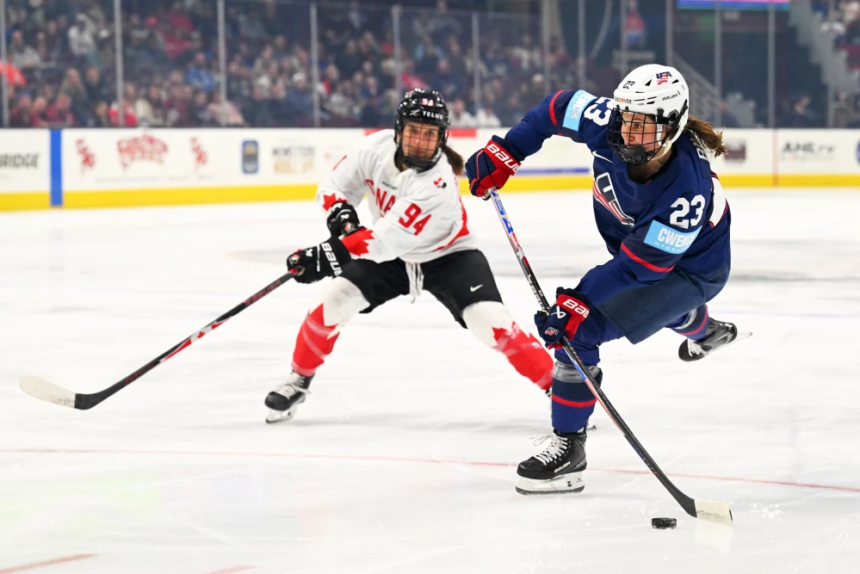
PWHL raises the stakes for Olympic rivals
Since women’s ice hockey debuted at the Olympics, Canada and the U.S. have dominated the sport, often meeting in the gold-medal game. However, the emergence of the Professional Women’s Hockey League (PWHL) in 2024 is changing the landscape. The league gives elite players regular high-level competition, helping national programs improve worldwide.
Canada has claimed five of the seven Olympic golds, while the U.S. has won two. The only time neither country made the final was in 2006, when Sweden took silver in Italy. Yet, the United States is on a six-game winning streak against Canada, including two victories at last year’s World Championship final. In the Rivalry Series in November and December, the U.S. outscored Canada 24-7, highlighted by a 10-4 win.
Team composition and experience
Canada relies heavily on experience, naming 16 gold medalists from the last Olympics to their 23-player roster. Every player competes in the PWHL. In contrast, the U.S. brings 11 returning Olympians, with seven still in college. This younger group must handle the pressure of being underdogs against the more experienced Canadians.
Sweden and Finland have historically been the main challengers to North America. Both nations have four PWHL players each. The Czech Republic, with eight PWHL athletes, could also make waves. They reached the World Championship semi-finals last year, and this is only their second Olympic appearance.
Finland has earned bronze in the last two Olympics and World Championships, consistently finishing in the top four in all but one of the Games. Sweden, however, has not medaled since 2006 and finished sixth at the recent World Championship, meaning a major improvement is needed to compete in Milan.
Olympic format and schedule
The tournament begins Thursday with a preliminary round split into two groups of five. Group A features the top-ranked nations: Canada, the U.S., Finland, Czech Republic, and Switzerland, all of which advance to the quarter-finals. Group B includes Germany, Sweden, Japan, Italy, and France, with the top three moving on to the last eight.