
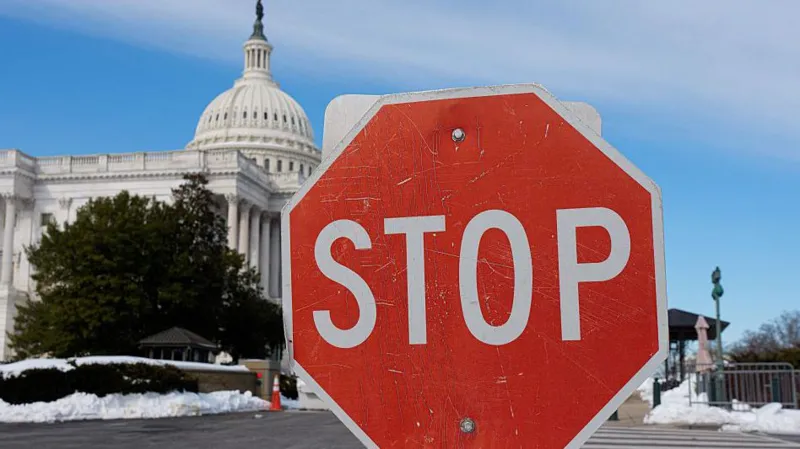
The U.S. faces a partial government shutdown, now in its third day. At its heart is a major political standoff over immigration policy and funding. The Senate has passed a spending package for most agencies. However, the House of Representatives has not yet approved it. Therefore, several key departments have been without funding since Saturday.
The central conflict involves the Department of Homeland Security (DHS). Senate lawmakers gave DHS two weeks of short-term funding. This move provides more time for long-term budget talks. Meanwhile, Democrats are pushing for significant changes to immigration enforcement. Their demands follow public anger over “Operation Metro Surge,” a Trump-era initiative. This operation drew widespread criticism after federal agents killed two U.S. citizens in Minneapolis.
As a result, Democrats want new rules for Immigration and Customs Enforcement (ICE) agents. Specifically, they demand active body cameras and a ban on masks. Representative Ro Khanna (D-CA) strongly opposes current ICE funding. “I just don’t see how in good conscience Democrats can vote for continuing ICE funding when they’re killing American citizens,” he said.
House Faces Tight Deadline and Key Hurdles
Currently, all focus is on the House. It must pass the Senate’s package to end the shutdown. First, however, the bills face a procedural “rule vote.” Democrats plan to oppose this initial step. Additionally, a severe winter storm could delay lawmakers’ return to Washington. This timing is critical because Republicans hold only a one-vote majority.
Despite these challenges, House Speaker Mike Johnson (R-LA) remains confident. “We’ll get this done by Tuesday,” he stated. Former President Donald Trump also urged quick action online. He warned against a “long, pointless, and destructive Shutdown.”
Shutdown Impacts Disrupt Key Services Nationwide
The funding lapse is already causing significant disruptions. For instance, thousands of FAA and air traffic control staff are furloughed or working unpaid. Furthermore, the shutdown will delay the vital monthly jobs report from the Bureau of Labor Statistics. Economists, investors, and policymakers all rely on this data.
In conclusion, the Department of Homeland Security remains the focal point. The upcoming House vote and the two-week negotiation window will decide the next steps. The nation now waits to see if the government will fully reopen or if the political deadlock will worsen.