
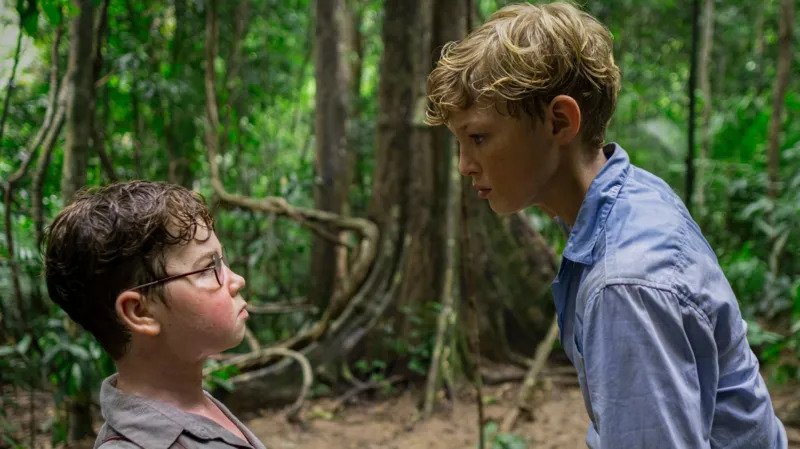
Acclaimed screenwriter Jack Thorne is set to present a profound new interpretation of William Golding’s seminal novel, Lord of the Flies, in an upcoming BBC series. His adaptation aims to move beyond the common perception of the story as a simple tale of inherent malevolence.
Beyond “The Evilness of Boys”
Thorne challenges the idea that Lord of the Flies is merely shorthand for the “evilness of boys.” He sees deeper complexity within Golding’s work. For Thorne, the novel presents a “remarkably tender portrait” of young boys lost in an uncontrollable situation. This perspective aligns with his celebrated work on masculinity and violence, exemplified by his award-winning series Adolescence.
Understanding the “Epitome of Evil”
Thorne’s understanding of the characters evolved dramatically from childhood to adulthood. He initially saw the character Jack, the instigator of the island’s hunts, as the pure “epitome of evil.” Now, Thorne views Jack as a deeply complicated figure—a boy who is “as loving as he is hateful.” This nuanced understanding forms the heart of the new adaptation.
A Structural “Relay Race” of Perspectives
The four-part series uses a unique narrative structure to explore this complexity. Each episode bears the name of a key character, offering a deep dive into their individual perspective as the island descends into chaos. Thorne describes this approach as a “relay race,” moving from the rational Piggy, to the conflicted Jack, to the sensitive Simon, and finally to the elected leader Ralph. This structure allows viewers to literally “look into the eyes of someone that is fighting themselves.”
A Challenging and Serious Production
Filmed on location in Malaysia with a large cast of children, Munden admits the shoot was “chaos.” However, he praises the young actors, particularly the four leads, for taking their roles “very seriously.” T