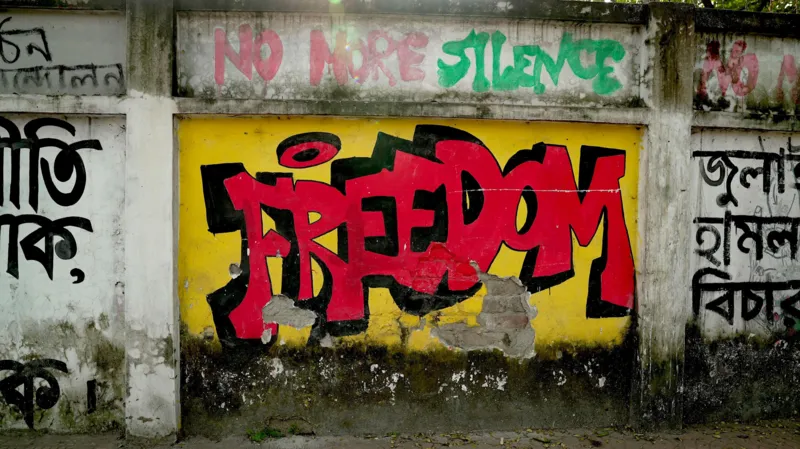
Rahat Hossain, 24, risked his life trying to save his friend during a student-led uprising that shook Bangladesh in July 2024. Emam Hasan Taim Bhuiyan, 19, had been shot by police, and footage of Hossain dragging him to safety went viral.
The violent crackdown sparked nationwide protests. Within two weeks, Prime Minister Sheikh Hasina fled the country, ending decades of her rule. Around 1,400 people lost their lives, most in the government’s security operations.
This movement marked one of the first major Gen Z-led revolutions worldwide. Young leaders briefly took key roles in an interim government, hoping to reshape Bangladesh.
Student Party Struggles
The National Citizen Party (NCP), formed by the protest leaders, now faces criticism for inexperience and internal divisions. Many young voters feel it lacks the capacity to govern, leaving older parties to regain influence.
Hossain initially joined the protests over new civil service quotas, but the movement quickly became a fight against autocratic rule.
Jamaat-e-Islami Gains Momentum
Jamaat-e-Islami, an Islamist party, has gained traction in the run-up to the February 2026 elections. Despite its controversial history during the 1971 independence war, younger voters see it differently. The party supported student protests in 2024, earning credibility among some youth.
Jamaat’s leader, Shafiqur Rahman, pledges to fight corruption and restore judicial independence. Student elections at top universities show the party’s growing influence, with its candidates winning key seats, including Dhaka University’s student union for the first time since independence.