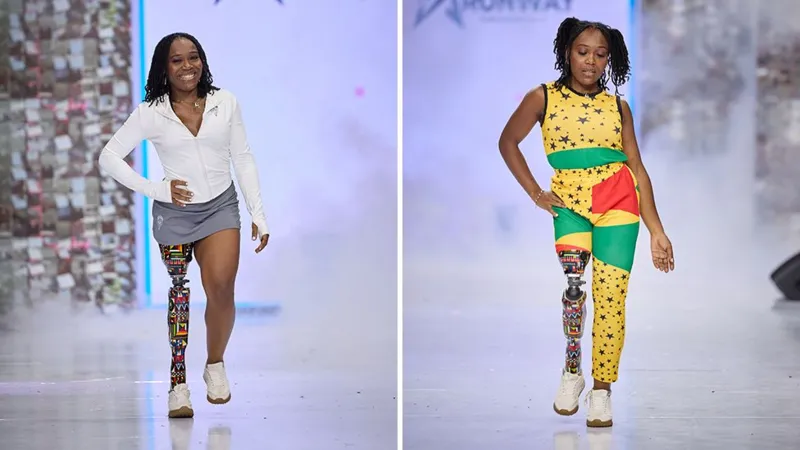
At a major fashion show in Accra last year, Abena Christine Jonel captured instant attention. The 33 year old model walked the runway wearing a prosthetic leg wrapped in bright kente cloth. Her presence made the moment impossible to ignore.
Instead of blending in, Abena chose to stand out. Through fashion, she pushed a clear message about disability, pride, and visibility in Ghana.
A Life Altered at an Early Age
At just two years old, doctors diagnosed Abena with a rare and aggressive cancer. A large tumor appeared on her right calf and spread quickly. Her mother faced a painful decision and chose amputation over radiation.
That choice saved Abena’s life. Over time, movement became her way forward. Each step helped her rebuild confidence and control.
Unlike the usual narratives around disabled children, Abena never stayed quiet or compliant. She questioned rules, spoke loudly, and defended herself. Those traits later became her strength.
From the United States to West Africa
Abena grew up in Chicago, where she later worked as a writer and poet. Eventually, she became a public speaker and shared her story with others. Her goal stayed simple. She wanted people to see what was possible.
Still, she felt drawn toward Africa. That feeling grew stronger as she studied pre colonial West African history. Over time, curiosity turned into longing.
Everything changed during her first visit to Ghana in 2021. While visiting the Assin Manso slave river site, she felt a deep sense of belonging. Leaving Ghana caused intense grief. Soon after, she made a life changing decision and moved permanently.
Building a Home in Accra
Life in Accra welcomed Abena warmly. Neighbors claimed her as family. A Ghanaian woman now introduces her as her daughter.
For Abena, identity is not symbolic. She sees her connection to Ghana as ancestral and lived. The country feels like home.
Her prosthetic leg reflects that bond. She wraps it in kente every time. The fabric represents heritage, pride, and love.
Challenging Disability Stigma
Living in Ghana also revealed a gap. Abena noticed that disabled people rarely appear in positive public roles. As a result, stigma continues to grow.
In contrast, she saw gradual progress in the United States. Although barriers remain, more disabled people appear in media and public spaces.
Because of that difference, Abena speaks out. She believes visibility creates change. When people see disabled individuals living full lives, fear begins to fade.
She makes one point clear. Disability does not limit people. Instead, lack of access and support creates real barriers.
A Defining Runway Moment
That belief reached a new stage at Rhythms on the Runway, one of Africa’s biggest fashion events. Abena contacted the organizers herself. She knew representation would not happen without action.
When she stepped onto the stage at Osu Castle, the atmosphere shifted. Her walk sparked conversation across the crowd.
Cultural leaders praised her confidence and message. Fashion insiders called her appearance a sign of real inclusion.
For Abena, the meaning ran deeper. Disabled people did not sit in the audience that night. They stood at the center.
A Mission That Continues
Today, Abena balances modeling, speaking, and mentoring young amputees. She refuses to dim her presence for comfort.
Ghana gave her a platform. She intends to use it fully.