
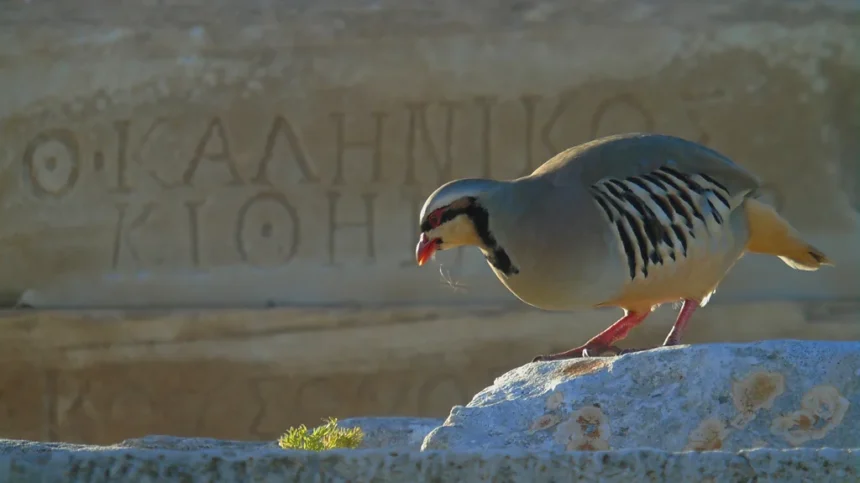
Across the world, ancient ruins are doing more than protecting history. Many of them are now protecting life.
From Greece to Peru, archaeological sites have become unexpected shelters for plants and animals. These places were preserved to protect culture, not nature. Yet because they were left untouched for centuries, they now act as safe zones in landscapes heavily changed by humans.
As cities grow and farmland expands, wildlife loses space. In contrast, ancient sites often remain calm, green, and stable. For many rare species, that makes all the difference.
A Gecko Surviving in the Middle of Lima
In Lima, Peru, a small grey brown lizard called the Lima leaf toed gecko hides in the cracks of ancient pyramids known as huacas. One of these sites is Huaca Pucllana, surrounded by busy roads and modern buildings.
The gecko once lived across the coastal desert. Today, most of that land is gone. Urban growth has pushed the species close to extinction.
According to researcher Alejandra Arana, these ancient monuments now hold one of the last pieces of the native desert ecosystem. Outside the ruins, there is almost nothing left for the geckos to survive on.
Wildlife Thriving Among Ruins
The gecko is not alone.
Around the world, scientists are finding rare species living inside historic sites:
- Rare orchids growing near ancient burial grounds in Italy
- A tiny snail species discovered in the ancient Greek site of Delphi
- New lizard species found in Machu Picchu
- Snakes, birds, and plants linked to myths that still exist today
In some places, ancient stories match real findings. Oak trees linked to Greek legends still stand. Poison hemlock, tied to the death of Socrates, still grows near old sites.
Nature has not just returned. In many cases, it never left.
Why Archaeological Sites Matter for Nature
Most of the world’s land has been changed by human activity. Wildlife populations have dropped sharply over the last few decades. Habitats are broken into small pieces, making survival harder.
Archaeological sites are different.
They are often protected for long periods. Farming, construction, and heavy use are limited or banned. Site managers usually aim to keep a natural look, which helps animals and plants settle and stay.
In Greece, many major sites have been protected since the nineteenth century. That long term stability has allowed ecosystems to survive while surrounding land changed.
Greece’s Ancient Sites as Biodiversity Shelters
In 2022, Greece launched a major research project to study biodiversity inside archaeological sites.
Over two years, experts studied 20 sites from different periods of Greek history. They recorded more than 4,400 species of plants and animals.
That is around eleven percent of all known species in Greece, found in less than one percent of the country’s land.
The findings were clear. Even small protected areas can act as strong shelters for life.
Challenges of Studying Nature in Historic Places
Research inside ancient sites is not simple.
Biologists must work carefully. They cannot dig freely or disturb ruins. Botanists face another issue. Vegetation is often cut back to protect monuments, which can reduce plant diversity.
Despite this, the results show strong potential. Small changes, like selective cutting and less chemical use, could greatly help plant life without harming ruins.
Human History and Nature Are Linked
Some species found at these sites show how humans shaped nature over time.
At a Roman site in western Greece, researchers may have found a grass species that arrived centuries ago through trade or migration. Other plants once thought unique to a single site turned out to be natural variations.
In Dodona, ancient oak trees still grow where myths say Zeus spoke through leaves. In Epidaurus, researchers found snakes linked to ancient healing symbols. At Delphi, birds tied to legend still fly overhead.
The past and present are deeply connected.
Tourism and Other Risks
Even protected sites face threats.
High visitor numbers can disturb wildlife. Roads, railways, and nearby towns can also cause damage. Researchers in Machu Picchu warn that without careful planning, even protected areas can slowly lose biodiversity.
Protection alone is not enough. Active care matters.
Bringing Archaeology and Biology Together
One major problem is that archaeologists and biologists often work separately. They use different terms and focus on different goals.
Recent projects show that cooperation works.
In Greece, future site signs will include information about local wildlife, not just history. More sites will be studied, and researchers will look at how nature appears in ancient art and texts.
Experts believe archaeological sites can help meet global conservation goals by adding more protected spaces without creating new reserves.
Ancient Places, Living Futures
These sites are more than ruins. They are living landscapes.
They show that protecting history can also protect life. With thoughtful management, ancient places can remain safe spaces for rare species in a rapidly changing world.
In saving the past, we may also be saving the future.