
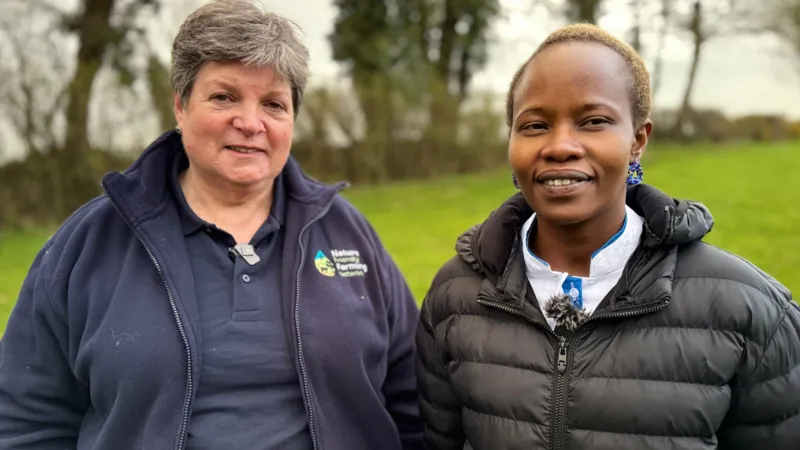
Two women, living worlds apart, are facing the same growing challenge on their farms. Jackline Mugoboka from Rwanda and Louise Skelly from County Down recently met and shared their experiences. Despite the distance, both are dealing with the harsh effects of climate change.
Farming Under Pressure in Rwanda
Mugoboka manages a one-hectare farm where she grows bananas, beans, and tomatoes. While this may seem small, it is actually larger than most farms in Rwanda. Farming in the country is heavily driven by women, who make up nearly 90% of the agricultural workforce.
Climate change has made their lives harder. Many women now carry extra responsibilities like collecting water, gathering firewood, and maintaining crops. These tasks become even tougher during extreme weather conditions.
In 2023, Rwanda experienced severe floods and landslides. These disasters destroyed crops, homes, and livelihoods. According to Mugoboka, many farmers are losing everything due to unpredictable weather patterns.
She also pointed out a global imbalance. Africa produces only a small share of greenhouse gas emissions, yet it suffers some of the worst impacts. Limited resources make it difficult for farmers to adapt or recover.
Northern Ireland Faces Rising Extremes
Skelly has spent over four decades farming near the River Bann. She raises sheep and prepares for lambing season each year. Over time, she has noticed clear changes in weather patterns.
Flooding has become more frequent in the past decade. These extreme conditions make farm management harder and more uncertain. Skelly believes the changes are clear and cannot be ignored.
Meeting Mugoboka gave her a new perspective. She realized that farmers in different parts of the world are facing similar threats, even if their situations differ.
A Shared Global Reality
For Mugoboka, it was surprising to learn that Northern Ireland also deals with flooding. She had assumed such problems were limited to less developed regions.
Her visit showed that climate change affects everyone. The difference lies in how prepared each region is to handle it. Wealthier areas may have better coping systems, while others struggle with limited support.
Still, both women agree on one thing. No country is safe from climate shocks anymore.
Growing Threat of Farm Diseases
Changing weather patterns are also increasing the spread of diseases. Farmers are now facing outbreaks that appear suddenly and without warning.
Mugoboka said diseases are emerging unexpectedly in Rwanda. This adds more pressure on already struggling farmers.
In Northern Ireland, Skelly is dealing with a new concern. The bluetongue virus, once mostly found in Africa, has now reached the region. It spreads through biting midges and affects sheep health.
The disease was confirmed locally in late 2025. Experts believe infected midges traveled from England along coastal winds. As a result, Skelly is considering vaccinating her livestock to prevent losses.
A Call for Awareness and Action
The stories of these two farmers highlight a shared global crisis. Climate change is not limited by borders. It is affecting food production, livelihoods, and rural communities everywhere.
Their experiences show the urgent need for stronger support systems, better planning, and global cooperation. Without action, farmers across the world will continue to face growing risks.