
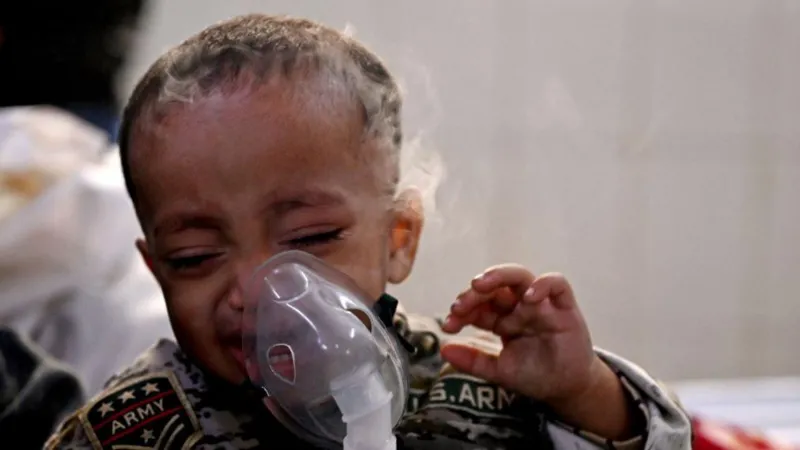
Delhi’s toxic winter smog has once again pushed the city into a health emergency, with children suffering the most. As a thick blanket of pollution settles over the capital, paediatric clinics are overflowing with young patients struggling to breathe.
At a busy clinic in Noida, just outside Delhi, the waiting area is filled with worried parents holding children who are coughing, sneezing, or gasping for air. Most of these symptoms began in October—the moment pollution levels spiked to dangerous heights and securing a doctor’s appointment became increasingly difficult.
Northern India faces this crisis every year as winter approaches. The choking air isn’t caused by one single factor but a combination of slowed wind movement, industrial pollution, vehicle emissions, cold temperatures, and widespread crop stubble burning in nearby states.
For the past month, Delhi’s Air Quality Index (AQI) has stayed between 300 and 400—more than 20 times higher than the World Health Organization’s safe limit. AQI levels above 400 can harm even healthy individuals, but young children and the elderly face the gravest threats.
Hospitals across Delhi report a surge in paediatric cases linked to hazardous air. Dr. Shishir Bhatnagar, a paediatrician in Noida, explains that fine particulate matter (PM2.5) can severely weaken a child’s developing immune system. He says cases of respiratory distress have increased dramatically: from the usual 20–30% to nearly 70% during peak pollution months.
Despite emergency measures—such as halting construction, restricting high-emission vehicles, and even attempting cloud seeding to induce rain—Delhi’s pollution refuses to ease. Each winter, anxiety spikes among the city’s 20 million residents, especially parents watching their children struggle against the smog-infested air.
#DelhiAirPollution #ToxicAirCrisis #ChildHealth #AQIIndia #WinterSmog #EnvironmentalHealth #CleanAirNow