Faster Offside Decisions
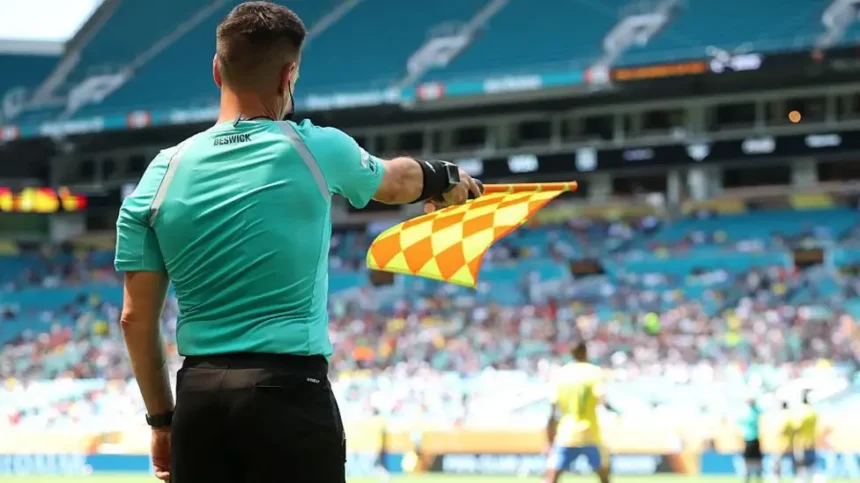
FIFA will roll out an upgraded semi automated offside system at the 2026 World Cup. The aim is to speed up VAR decisions and reduce long stoppages during matches. Assistant referees will now receive instant audio alerts when a player is more than 10cm offside.
This update means the assistant does not always need to wait for play to fully continue before reacting. However, the assistant referee still controls when to raise the flag and stop the game.
How the New System Works
The new technology builds on earlier versions tested at major tournaments such as the Club World Cup and the Intercontinental Cup. Earlier systems only triggered alerts when a player was clearly offside by more than 50cm. The updated version increases precision and reacts to tighter margins.
FIFA has also added safeguards. If there is any suspicion of a technical fault, officials can ignore the alert and rely on standard judgment.
Limits of the Technology
The system does not solve every offside situation. It still struggles with very tight calls where players are almost level. It also becomes less reliable when players are on the ground or when multiple players are close together.
It is designed only for positional offside decisions. It cannot decide subjective cases, such as whether a player interfered with an opponent without touching the ball.
AI Player Scanning and 3D Models
FIFA will also use AI powered 3D avatars of every player at the tournament. All 1,248 players across the 48 teams will be digitally scanned during pre tournament sessions.
Each scan takes about a second and is done once during official photo shoots. These digital models will help produce clearer and more accurate offside graphics for TV broadcasts.
Safety Concerns Behind the Change
The move also responds to concerns about delayed flags and player safety. In one serious incident in 2025, Nottingham Forest striker Taiwo Awoniyi suffered a severe injury after a delayed offside decision led to continued play.
FIFA hopes faster alerts will reduce these risks and prevent unnecessary collisions during live play.
What Fans Can Expect
At the 2026 World Cup, fans should see quicker decisions, fewer long VAR pauses, and clearer offside visuals on screen. The goal is a smoother viewing experience with fewer controversial delays.