
President Trump has made tariffs a central part of his economic policy. In a recent address, he said tariffs are bringing jobs, higher wages, and growth to the US. Many economists disagree, but there’s no doubt that tariffs have reshaped the global economy—and they will continue to do so in 2026.
Slower Global Growth
The IMF says that even though the tariff impact isn’t as big as first feared, it’s still slowing global growth. They now expect the world economy to grow 3.1% in 2026, down from last year’s 3.3% forecast. Kristalina Georgieva, head of the IMF, says growth is better than feared but still too slow to meet people’s expectations.
Economists like Maurice Obstfeld point out that the world avoided a trade disaster because countries didn’t retaliate strongly, and China pushed the US to ease up quickly. Still, tariffs raise costs, create uncertainty, and make it harder for businesses to plan and invest.
The US Economy Stays Strong
Despite these challenges, the US economy has remained resilient. In the third quarter of 2025, growth hit 4.3%, the fastest in two years. Tariffs have added a small amount to inflation, but consumer spending—responsible for a quarter of global economic activity—remains strong.
Some of the negative effects of tariffs have been softened by lower interest rates, a weaker dollar, exemptions in the rules, and businesses finding ways around them. However, these exemptions also make trade rules complicated for companies trying to navigate deals with countries like the UK, Japan, and South Korea.
Trade Tensions Continue
US-China trade relations remain tense. Even after multiple rounds of talks, tariffs and trade restrictions between the two largest economies are higher than at the start of Trump’s second term. Issues include access to rare earth metals, advanced computer chips, and concerns over Chinese overproduction.
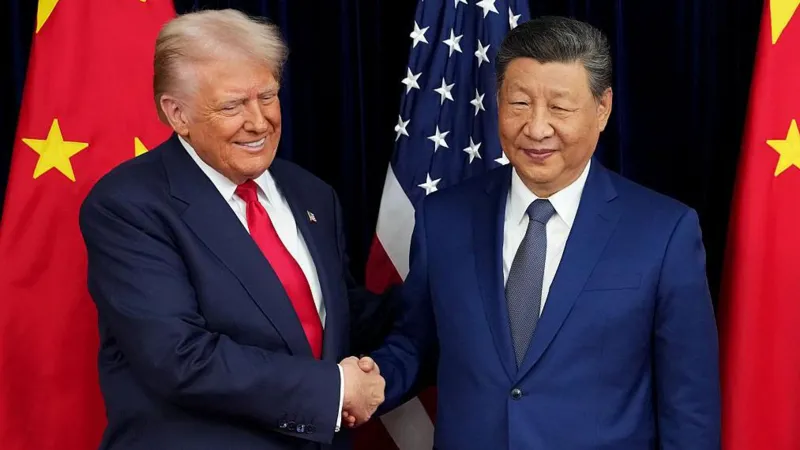
A key meeting is set for April 2026 when Xi Jinping will host Trump. While major breakthroughs aren’t expected, keeping the conversation going is important. China wants fair competition globally, while the US wants to protect domestic manufacturing and reduce reliance on foreign goods.
Oil and Shipping
China, a major hub for manufacturing, is still feeling the impact of US tariffs. Trade between the US and China fell for the third year in 2025, showing that tensions continue to influence the global market.
Looking Ahead
Tariffs are not going away anytime soon. They are part of the US plan to support domestic manufacturing and industry. While the US economy benefits from strong consumer spending and investments in technology like AI, some goals, such as creating more manufacturing jobs, are still unmet.
For the global economy, tariffs mean higher costs, uncertainty, and slower growth. But businesses and countries are adapting, finding new trade deals, and looking for ways to keep economies moving. In 2026, tariffs will continue to shape trade, markets, and economic strategies worldwide.