
Funding Deal Averts Four-Day Shutdown
The House of Representatives approved a federal funding bill on Tuesday to end the four-day government shutdown. The measure passed 217-214 and will go to President Donald Trump’s desk for signature.
The legislation funds about 97% of the federal government through the end of fiscal 2026. It reflects a compromise negotiated between Senate Democrats and the White House. Trump played a key role in shaping the deal and calming conservative resistance to ensure its passage.
Democrats Split on the Bill
House Minority Leader Hakeem Jeffries, D-N.Y., opposed the plan, but 21 Democrats voted in favor despite his objections. Jeffries and his top lieutenants still voted against it. On the Republican side, 196 members supported the measure, while 21 voted no.
Earlier in the year, Democrats had walked away from a bipartisan House funding deal over disputes with Trump, leaving 78% of federal funding uncertain. The disagreement centered on the Department of Homeland Security (DHS) and a wider package covering Defense, Labor, Health and Human Services, Transportation, HUD, and Education.
Compromise Terms and Senate Approval
The new agreement fully funds most federal departments while extending current DHS funding through February 13. This provides time for both parties to work on a longer-term solution.
Speaker Mike Johnson, R-La., said the legislation would pass despite some dissatisfaction with the negotiation process. “This is not my preferred route. I wanted to keep all six bills together,” he said. “But the president agreed with Schumer to separate Homeland, and we’ll handle it. Republicans are going to do the responsible thing.”
SAVE America Act and Voter ID Debate
The bill also intersected with the controversial SAVE America Act, which would require voter ID at the polls and proof of citizenship during registration. Some House conservatives, including Reps. Anna Paulina Luna, R-Fla., and Tim Burchett, R-Tenn., initially threatened to block the bill unless the voter ID measure was included. They backed off after discussions with the White House.
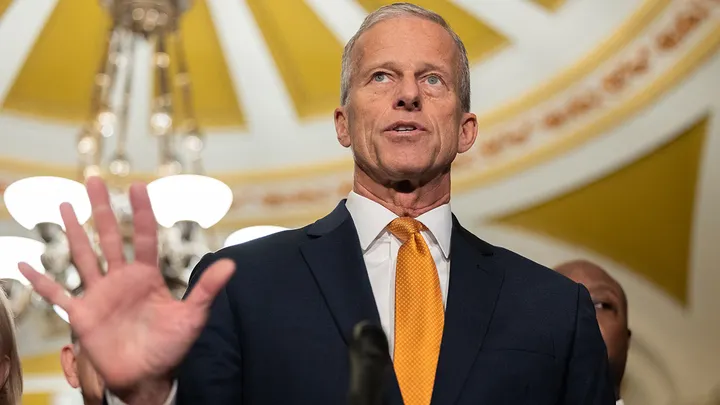
Sen. John Thune noted that forcing the SAVE Act through a “standing filibuster” in the Senate would take months, due to procedural rules allowing extensive debate and amendments. No commitments were made to fast-track the voter ID legislation.
Next Steps
It is unclear exactly when Trump will sign the funding bill, but the White House is expected to act quickly. The move comes just months after the previous record-setting 43-day government shutdown ended in November.