The growing conflict involving Iran has created serious economic pressure across Gulf countries after attacks damaged major energy facilities and disrupted global gas supplies. Experts warn that the financial impact could continue for years and may weaken economic growth across the Middle East.
In the early 1990s, Qatar struggled with rising debt and weak government income. To improve its economy, the country focused on developing its huge offshore natural gas reserves. Qatar also invested heavily in liquefied natural gas (LNG), allowing gas exports to reach global markets through shipping routes.
This strategy helped build Ras Laffan, a large industrial city near Doha. Over the years, the facility became the world’s biggest LNG export hub and played a major role in turning Qatar into one of the wealthiest countries in the world.
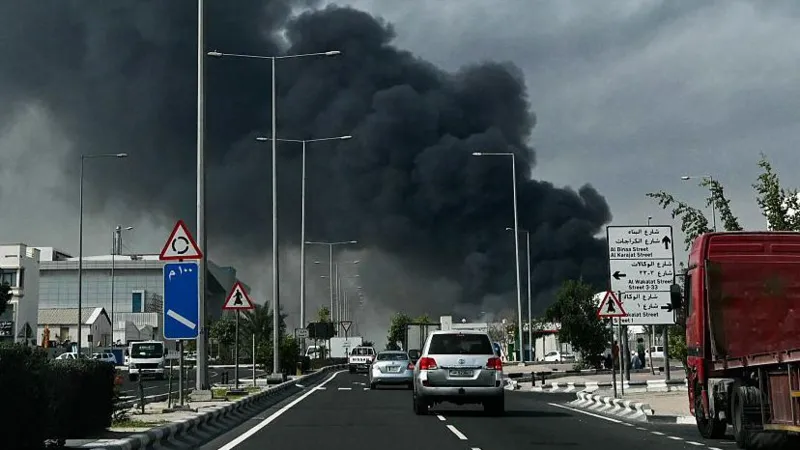
However, the situation changed dramatically on 18 March when an Iranian ballistic missile reportedly struck the Ras Laffan gas complex. The attack disrupted around 17% of the world’s LNG supply and created major concerns in global energy markets.
Industry experts estimate that the damage could cost QatarEnergy nearly $20 billion in annual revenue losses. Important Asian markets, including China, also experienced supply disruptions. Reports suggest repairs to the damaged facilities may take between three and five years.
Energy Markets Under Pressure
The attack created panic across Gulf states because many countries in the region depend heavily on energy exports. Analysts believe the incident exposed weaknesses in the Gulf’s economic security and increased fears about future regional instability.
Karen Young, a senior research scholar at Columbia University’s Center on Global Energy Policy, said the attack shocked both global energy markets and Gulf nations themselves. According to experts, many Gulf countries now feel increasingly vulnerable because critical infrastructure remains at risk.
Since the conflict escalated after US and Israeli strikes on Iran in late February, more than 80 facilities across the Gulf region have reportedly suffered damage. Several sites in Bahrain, Kuwait, Saudi Arabia, and the United Arab Emirates were also affected.
Middle East Growth Forecast Reduced
The financial damage across the Gulf has already reached an estimated $58 billion. Economic analysts believe the long term effects could slow development projects, reduce investor confidence, and weaken regional trade activity.
The World Bank recently lowered its Middle East growth forecast to 1.8% for this year because of the ongoing conflict. Earlier projections expected the region to grow by around 4% in 2026.
The bank also warned that continued instability could leave lasting economic scars on Gulf economies. Qatar and Kuwait are expected to experience the biggest economic contraction if tensions continue.
Rising Concerns for Global Energy Supply
Global energy markets remain sensitive as Gulf countries continue assessing the damage. Any further escalation could increase oil and gas prices worldwide and create additional pressure on international supply chains.
Economic experts believe Gulf nations may now focus more on protecting energy infrastructure, diversifying their economies, and reducing dependence on unstable regional conditions.