Hungary has entered a new political chapter after Péter Magyar secured a sweeping election victory, ending the long rule of Viktor Orbán.
After 16 years in power, Orbán’s leadership has come to an abrupt end. Early results, based on more than 98% of counted votes, show Magyar’s Tisza party winning a dominant 138 seats. In comparison, Orbán’s Fidesz party secured only 55 seats, while the far-right Our Homeland party managed just six.
A Historic Political Shift in Hungary
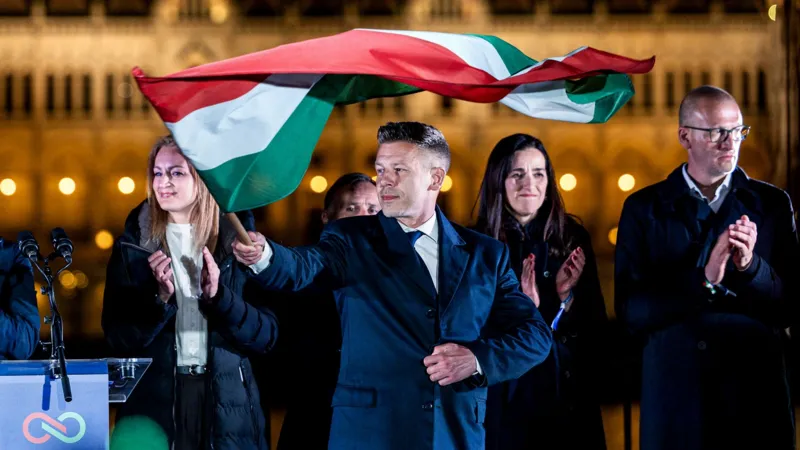
Magyar addressed a large crowd in Budapest, celebrating what he described as a collective victory for the people. Standing near the Danube River, he declared that Hungarians had successfully brought down a long-standing political system.
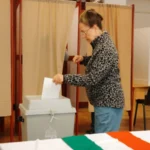
Voter turnout reached a record 79.5%, showing strong public engagement. Magyar called it an unprecedented moment in Hungary’s democratic history, highlighting both participation and the scale of his party’s mandate.
From Insider to Opposition Leader
Magyar, a former insider within Hungary’s political system, spent the past two years building grassroots support. He traveled across villages, towns, and cities, speaking directly to citizens.
His campaign focused on issues such as corruption, favoritism, and lack of transparency. Many voters responded to his message and pushed for change after years of dissatisfaction.
Foreign Policy Set for a Reset
Orbán maintained close ties with global figures like Donald Trump and Vladimir Putin. His government often clashed with the European Union and took positions that frustrated Ukraine.
Magyar plans to take a different direction. He has promised to strengthen relations with the European Union and improve cooperation with Ukraine. His approach signals a shift away from Russia and toward Western alliances.
A Defining Moment in Hungarian Politics
Orbán’s political dominance came through four consecutive election wins and strong parliamentary control. However, this election changed the landscape within minutes of early results being announced.
In a notable moment, Orbán personally called Magyar to congratulate him on his victory. The gesture confirmed the scale of the political shift.
Hungary now faces a transition period, as Magyar prepares to reshape both domestic policies and international relations. His leadership marks a clear break from the past and sets the stage for a new era.