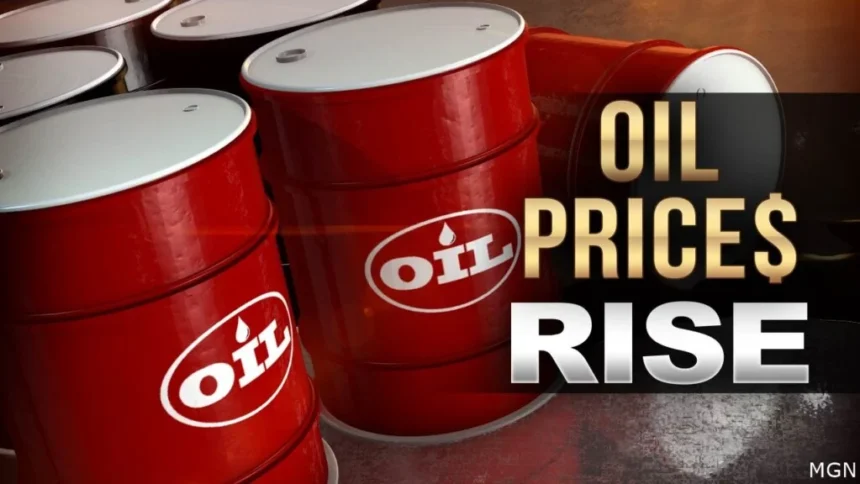
Oil prices climbed sharply on Thursday as the conflict involving Iran disrupted the global flow of crude oil. Prices returned to levels last seen before the summer, raising fresh concerns about inflation and interest rates.
The rise in oil prices also put pressure on financial markets. U.S. stocks moved lower, while investors watched the bond market for signs of further economic stress.
Quick Facts
| Detail | Information |
|---|---|
| What happened | Oil prices rose as the Iran conflict disrupted global crude supplies. |
| Where | New York and global financial markets |
| When | Thursday |
| Markets affected | S&P 500, Dow Jones Industrial Average and Nasdaq Composite |
| S&P 500 | Down 0.5% |
| Dow Jones | Down about 340 points, or 0.7% |
| Nasdaq | Down 0.5% |
| Why it matters | Higher oil prices are increasing concerns about inflation and interest rates. |
Oil Prices Rise, Wall Street Falls
Oil prices continued their climb on Thursday. The latest increase pushed prices back toward levels seen before the summer.
The conflict involving Iran has disrupted the movement of crude oil. Investors worry that continued supply problems could keep energy prices high.
Higher oil prices can create wider economic problems. Businesses may face higher energy and transportation costs. Those costs can eventually reach consumers.
At the same time, Wall Street continued to struggle. The S&P 500 fell 0.5% during Thursday’s trading session. The index was heading toward its fourth consecutive daily decline.
Despite the recent losses, the S&P 500 remains close to its record high. The index reached that peak last month.
The Dow Jones Industrial Average also declined. It was down about 340 points, or 0.7%, at 1:54 p.m. Eastern time.
Oil Prices Fuel Inflation and Rate Fears
Oil markets remain the main focus for investors. The conflict has created concerns about the global supply of crude.
Those concerns have pushed oil prices higher. The increase has also revived fears about inflation.
Investors are closely watching interest rates. Higher inflation could make it harder for central banks to reduce borrowing costs.
The bond market has also come under pressure. Rising yields can affect borrowing costs across the economy.
Oil prices play a major role in the global economy. Crude oil helps power transportation, manufacturing and many other industries.
When oil becomes more expensive, companies often face higher operating costs. Consumers can also feel the impact through fuel, transportation and other goods.
Geopolitical conflicts can make the situation worse. Markets often react quickly when investors fear that major oil supply routes could face disruptions.
The current conflict involving Iran has therefore become an important factor for energy and financial markets.
Oil Prices Rise as Markets Face Pressure
Financial markets will also focus on inflation and interest rate expectations. A sustained rise in energy prices could remain an important concern for investors.
Oil prices rose again on Thursday as the conflict involving Iran disrupted global crude flows. The increase has renewed concerns about inflation and interest rates.
Wall Street also moved lower. The S&P 500, Dow and Nasdaq all declined, adding to recent market weakness.