
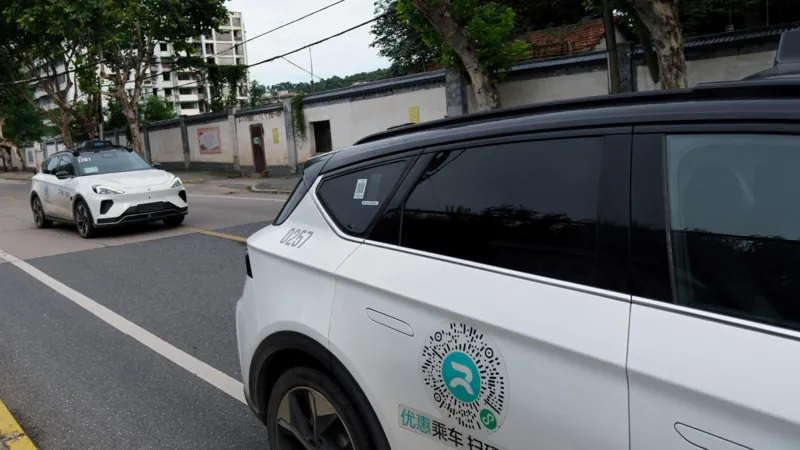
A large-scale robotaxi failure recently disrupted traffic in Wuhan, China. Around a hundred self-driving cars came to a sudden halt in the middle of busy roads. Local authorities confirmed that a system malfunction likely caused the issue. Passengers managed to exit the vehicles safely, and no injuries were reported.
Videos shared on social media showed rows of stationary robotaxis, and one clip appeared to capture a minor collision linked to the incident. Police have not confirmed any major damage but continue to investigate the situation.
Company Response and Ongoing Investigation
The robotaxi service is operated by Baidu through its Apollo Go platform. The company has not yet issued a detailed public response. Authorities stated that the exact cause remains under review.
Baidu runs its autonomous taxi service in many cities across China and other regions. The company has played a key role in expanding driverless transport, which makes this disruption especially notable.
Growing Safety Concerns Around Driverless Cars
Experts say this incident highlights important risks in autonomous systems. Jack Stilgoe, a professor at University College London, noted that driverless technology may reduce accidents overall. However, he added that it can still fail in unexpected ways.
The Wuhan outage adds to a series of similar issues. In December 2025, a power failure in San Francisco affected Waymo vehicles and caused widespread traffic delays. Earlier, in Chongqing, an Apollo Go robotaxi fell into a construction pit while carrying a passenger.
Future of Robotaxi Technology
Despite these challenges, companies like Uber and Lyft continue to explore partnerships with Baidu. They plan to test Apollo Go vehicles in the UK, subject to regulatory approval. Trials are expected to begin in 2026.
Experts believe that as autonomous technology grows, governments and companies must focus on new safety standards. These systems still require strong monitoring to prevent failures like the one seen in Wuhan.