
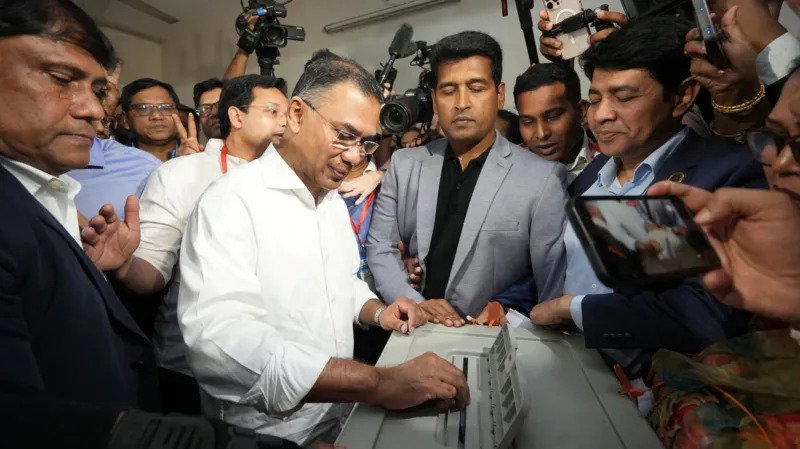
Tarique Rahman is poised to become the next prime minister of Bangladesh after his centre-right Bangladesh Nationalist Party (BNP) secured a majority in the recent general election.
A Political Legacy
Rahman, 60, is the prominent figurehead of the Zia family, a political dynasty that has shaped Bangladesh for decades. Both his parents previously led the country. His mother, Khaleda Zia, served two terms as prime minister, while his father, Ziaur Rahman, a former military ruler, was a key figure in Bangladesh’s independence and founded the BNP in 1978.
Challenges Along the Way
Rahman’s journey to leadership has not been smooth. He has faced long periods of exile, accusations of nepotism, and corruption claims from political rivals. In 2007, during a military-backed caretaker government, he was arrested on corruption charges. He claimed he was tortured while awaiting trial and spent 18 months in prison. After his release, he moved to London.
Despite living abroad, Rahman continued to influence BNP strategy. He acted as the party chairman after his mother was sentenced to prison in 2018. Over the years, he faced multiple criminal investigations, including cases linked to a grenade attack on a political rally in 2004. Most charges were later dropped.
Rahman returned to Bangladesh on 25 December 2025. Five days later, his mother passed away. On 9 January 2026, he officially became the BNP leader. Many analysts considered his rise inevitable, given the BNP’s reliance on the Zia family.
Some critics raised concerns about nepotism. Former BNP commerce minister Amir Khasru dismissed these concerns, saying the party was restricted under the Hasina regime and could not select a leader outside the family.
The key question now is how Rahman will lead both his party and the nation. Political analyst Mohiuddin Ahmed noted that Rahman has experienced the harsh realities of Bangladesh’s political conflicts and revenge-driven politics. Whether he can use this experience to govern effectively remains to be seen.