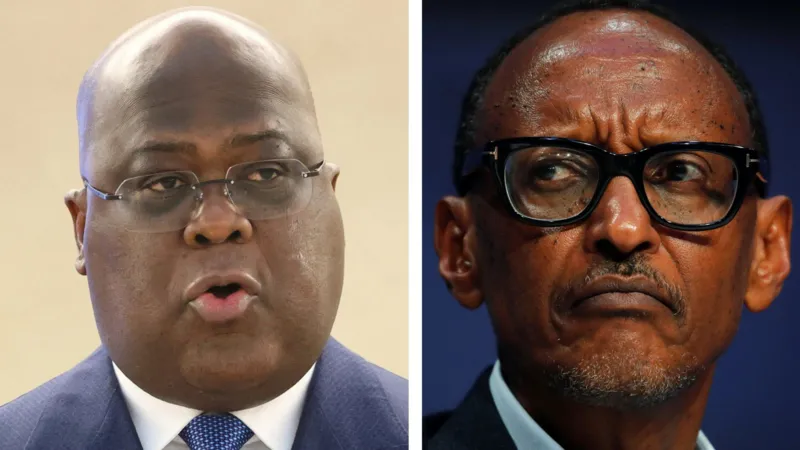
Hope and tension are rising at the same time as the Democratic Republic of Congo (DR Congo) and Rwanda prepare to sign a major peace agreement in Washington, DC. The ceremony—hosted by U.S. President Donald Trump—marks one of the most direct attempts yet to end the years-long conflict tearing apart eastern DR Congo.
But even as leaders arrive in the U.S. for the historic signing, intense fighting has erupted once again on the ground.
New Fighting Casts Shadow Over Peace Efforts
In eastern DR Congo, a region rich in minerals yet overwhelmed by violence, clashes have intensified between government troops and the M23 rebel group. DR Congo’s military says M23 is trying to sabotage the peace process, while M23 claims the government violated the ceasefire.
What remains undeniable is the human toll:
- Thousands killed this year
- Countless families displaced
- Entire communities uprooted as M23 expands its control
The timing of the renewed violence has raised serious concerns about whether the peace deal can hold.
Two Rivals Step Into the Same Room
DR Congo’s President Félix Tshisekedi and Rwanda’s President Paul Kagame have spent years publicly blaming each other for fueling the conflict. Their relationship has been marked by accusations, mistrust, and long-running diplomatic tensions.
Now they’re coming together in Washington to sign the same peace agreement—something many observers doubted would ever happen.
Earlier this year, Trump oversaw the signing of a preliminary version of the deal by both countries’ foreign ministers, calling it a “glorious triumph.” The Washington ceremony aims to finalize that agreement with both presidents present.
Leaders from several African and Arab nations, including Burundi and Qatar, are also attending. The M23 rebels, however, will not be at the event because they are taking part in separate negotiations in Qatar.
Why the U.S. Is Betting Big on This Deal
This peace agreement isn’t only about stopping the bloodshed—it also carries major economic and strategic importance.
DR Congo sits on an estimated $25 trillion worth of mineral resources, including:
- Cobalt
- Lithium
- Copper
- Manganese
- Tantalum
These minerals power smartphones, electric cars, renewable energy systems, and advanced military technology.
The United States wants stability in the region to unlock investment in mining, energy, and infrastructure. Trump has openly said that the U.S. expects increased access to DR Congo’s resources as part of the broader cooperation.
Experts Warn: A Signing Ceremony Won’t Bring Instant Peace
Despite the high-profile summit, regional analysts remain skeptical.
Bram Verelst, a Great Lakes region expert, told the BBC there is “no real ceasefire” and that M23’s military strength continues to grow. He doubts the ceremony alone will stop the violence, although it may increase international pressure on both sides.
Right now, M23 controls key cities such as Goma and Bukavu. Both DR Congo and Rwanda accuse each other of fresh attacks. Burundi—whose forces are fighting alongside DR Congo—has stayed silent after being accused of participating in new assaults.
The Core Issues That Still Divide Rwanda and DR Congo
Two long-standing disputes remain unresolved:
1️⃣ Rwanda wants the FDLR militia disarmed
The FDLR includes fighters linked to the 1994 genocide, and Rwanda views the group as a direct threat to its security.
2️⃣ DR Congo demands all Rwandan troops leave its territory
Congo insists on a full withdrawal—an issue that has derailed previous peace efforts for decades.
The new agreement includes these conditions, but similar commitments have been made since the 1990s without lasting success.
DR Congo is also demanding that M23 give up all territory it has captured, something the rebels have refused in their Qatar-mediated talks.
A Moment of Hope—But the Road Ahead Is Uncertain
Qatar and the United States are working closely behind the scenes to keep both sides engaged in the peace process. Their goal is to prevent the talks from collapsing and to push for concrete action once the leaders return home.
For the millions of people living in eastern DR Congo—families who have endured fear, displacement, and loss for years—this peace deal offers a rare moment of hope.
But whether it becomes a genuine turning point or another broken promise will depend on what happens next, long after the cameras and headlines fade.