
Local officials resist new immigrant detention sites
President Donald Trump’s plan to expand immigrant detention facilities by $45 billion is meeting resistance in several U.S. communities. The administration seeks to house thousands of immigrants in converted warehouses, privately run centers, and county jails. Meanwhile, some state and local officials are pushing back, citing safety, resource, and community concerns.
Federal authorities have been scouting sites nationwide. They aim to use Trump’s recent tax-cutting law to finance the expansion. Additionally, high-profile incidents like the fatal shootings of Renee Good and Alex Pretti in Minnesota have put ICE operations under intense scrutiny, further raising concerns about new facilities.
Public hearings and local opposition
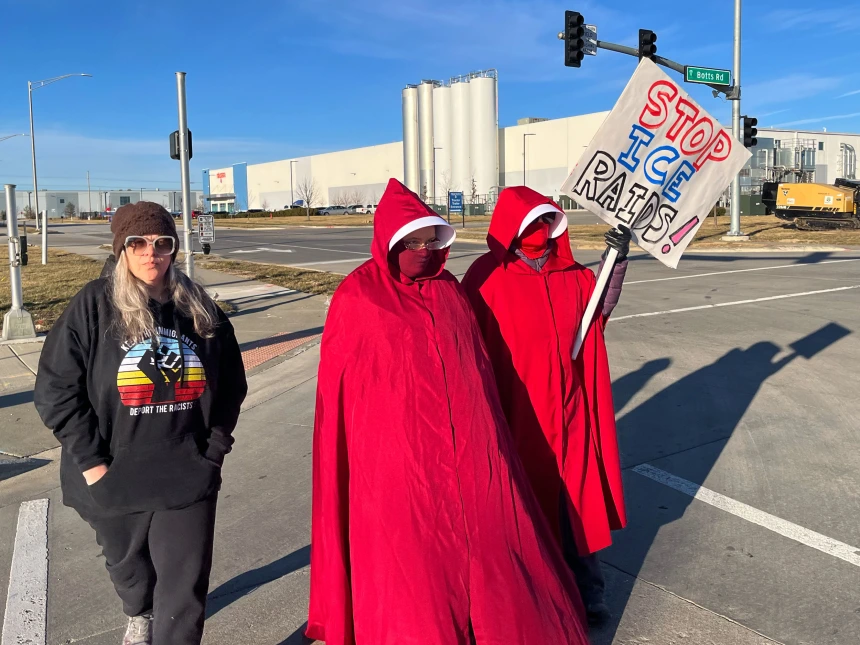
A proposed ICE center near Richmond, Virginia, drew hundreds to a Hanover County Board of Supervisors hearing. Resident Kimberly Matthews warned, “You want what happened in Minnesota to happen here? Build that detention center, and that’s exactly what will occur.”
In Kansas City, Missouri, officials moved quickly to pass an ordinance to block a new site. Similarly, mayors in Oklahoma City and Salt Lake City said property owners will not sell or lease facilities for ICE detention.
Democratic-led legislatures in several states are also proposing bills to prevent or discourage ICE facilities. New Mexico aims to block local government agreements for detention centers, while California considers a 50% tax on companies operating ICE facilities in the state.
Rapid growth of ICE detention sites
The number of immigrants held by ICE rose from 40,000 to more than 70,000 since Trump took office. Over a year, the number of ICE detention sites nearly doubled to 212 across 47 states and territories, mainly by using existing county jails or Marshals Service contracts.
In January, ICE purchased a $102 million warehouse in Maryland, an $84 million site in Pennsylvania, and a $70 million facility in Arizona. Officials also sought public comment on a warehouse in New York’s flood plain. Furthermore, ICE toured other large warehouses without releasing full details. “They will be well-structured detention facilities meeting regular standards,” the agency said.
Legal limits on local opposition
Local governments can refuse to lease property to ICE but generally cannot stop private owners from doing so. Courts have struck down laws in California and New Jersey attempting to block private ICE facilities. As a result, Hanover County and Orlando officials faced limits when evaluating potential sites. “ICE is immune from local regulation that interferes with its federal mandate,” City Attorney Mayanne Downs wrote.
Kansas City imposed a five-year moratorium on non-city-run detention facilities, even while ICE toured a potential 1-million-square-foot warehouse. Officials are exploring countywide moratoriums and permit restrictions to strengthen local resistance.
State-level legislation targets ICE facilities
New Mexico’s Democratic-led House passed legislation banning local contracts for ICE detention, affecting sites like the Otero County Processing Center near El Paso. While Republicans warned of economic impacts and job losses, Democratic Rep. Sarah Silva argued her constituents see ICE facilities as burdensome. “Our state can’t support ICE’s violations in places like Minneapolis,” Silva said.