
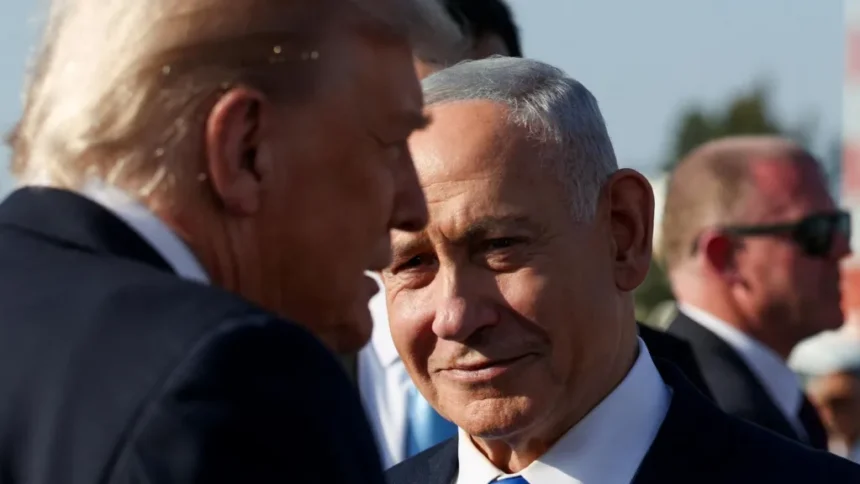
US President Donald Trump will host Israeli Prime Minister Benjamin Netanyahu in Florida on Monday. The talks will focus on Gaza and other pressing Middle East issues. Any decisions made could have far-reaching effects on the region’s future.
This will be their sixth meeting since Trump returned to office 11 months ago. Observers see it as a test of how closely the two leaders align on key topics.
Key Issues on the Agenda
Among the expected discussion points are relations with Syria’s new government, Iranian rearmament, and Hezbollah’s role in Lebanon. Most importantly, the leaders are expected to discuss progress on the Gaza ceasefire.
Israel and the US have occasionally diverged in their positions on the ceasefire. The Trump administration hopes to move the deal into its second phase in January. This would establish a Palestinian technocratic government, deploy an international security force, disarm Hamas, withdraw Israeli troops, and begin reconstruction in Gaza.
Humanitarian Situation in Gaza
Storms have worsened conditions in Gaza. Hundreds of thousands of displaced Palestinians live in basic tents that offer little protection from cold and flooding. A two-month-old baby recently died from exposure to the cold, bringing the total deaths from severe weather since December 10 to three. Another 17 people have died from collapsing buildings.
Aid agencies and the UN accuse Israel of restricting full access to basic supplies. Israel maintains it is allowing more aid deliveries.
Political Sticking Points
Netanyahu may resist rapid progress. Critics suggest he wants Hamas to fully disarm before Israeli troops withdraw. Hamas, on the other hand, insists that disarmament should happen alongside steps toward an independent Palestinian state.
The Trump-backed 20-point peace plan recognizes Palestinian aspirations for sovereignty. However, Netanyahu and his ministers have consistently opposed full Palestinian statehood since the ceasefire began in October. Defence Minister Israel Katz recently said Israel would continue building settlements in Gaza and would “never fully withdraw,” despite the ceasefire agreement.
Ongoing Violence
The ceasefire has not ended violence. In the 80 days since its implementation, at least 414 Palestinians have been killed by the Israeli military in Gaza. Israel says these strikes were in response to ceasefire violations. Meanwhile, three Israeli soldiers have been killed in attacks blamed on Hamas.
Israel is still waiting for Hamas to return the body of Ran Gvili, the last remaining dead hostage from the October 7 attacks that sparked the war.
US Mediation and Diplomatic Challenges
Trump’s mediation could influence key sticking points. For example, Israel opposes Turkey joining the International Stabilisation Force in Gaza, and Netanyahu may seek US approval for further military action against Iran.
Iran claims it is rearming its missile capabilities and warned of “all-out war” with Israel, the US, and Europe.
Next Steps
Zelensky’s meeting will also include US Secretary of State Marco Rubio, who supports Israeli positions. Observers expect discussions on West Bank settlements, potential annexation, and the broader regional security situation.
The Florida talks aim to push the Gaza ceasefire forward while addressing longer-term political and military concerns, with both humanitarian and strategic implications for the region.