
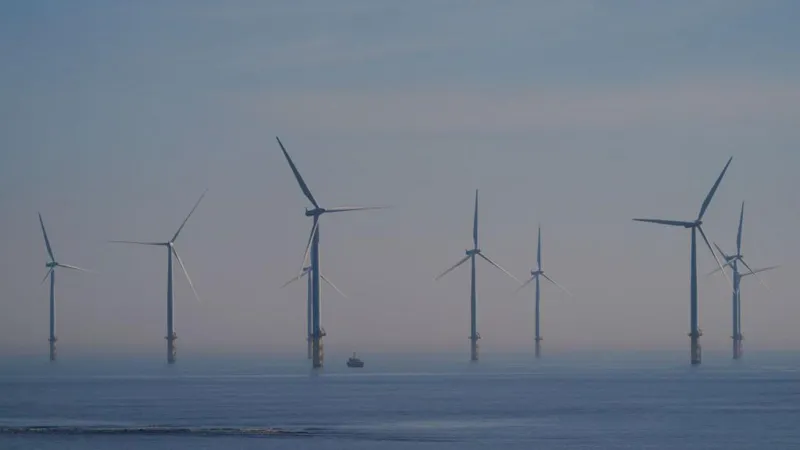
The UK government has awarded contracts for a record number of offshore wind projects, marking a big step in its plan to expand clean electricity across the country.
One of the largest projects is the Berwick Bank wind farm, which could become the biggest offshore wind installation in the world. Other major projects include Dogger Bank South off Yorkshire, Norfolk Vanguard off East Anglia, and Awel y Môr, the first successful Welsh offshore wind project in over a decade.
Chris Stark, head of the government’s clean energy programme, said the results were “a great outcome for the country” and that having projects across different regions will help deliver electricity more efficiently to homes.
The UK’s Clean Energy Goal
The government wants 95% of Great Britain’s electricity to come from clean sources by 2030. This includes wind, solar, and nuclear energy.
Currently, the country has 16.6GW of offshore wind capacity, with 11.7GW under construction. The latest auction added 8.4GW, moving the UK closer to its 2030 target of 43GW.
Nick Civetta from Aurora Energy Research said: “Getting that amount of capacity online by 2030 will be extremely challenging.”
Costs and Challenges
The latest auction set an average price of £91 per megawatt-hour (MWh) for seabed-fixed wind projects.
Energy Secretary Ed Miliband said: “Renewables will help bring down bills for consumers and reduce our reliance on fossil fuels.”
Political Debate
Some opposition politicians have criticized the high costs. Shadow Energy Secretary Claire Coutinho said the government had promised to reduce bills.
Supporters say offshore wind will create jobs, reduce carbon emissions, and lower reliance on gas.
Impact on Household Bills
The auction prices are fixed for 20 years, giving certainty to developers. The impact on bills will depend on electricity demand, gas prices, and market conditions. Previous renewable projects have helped bring down wholesale electricity costs by reducing the need for expensive gas power.